![]() |
|
|
|
|
#1 | |
|
Member
Join Date: Dec 2004
Location: Poland, Krakow
Posts: 421
|
Quote:
Well, I'm not surprise at all, it is obvious of using different iron objects and reforge them into different piece. But the statement written in the book sounds like they used especially and only horseshoes for hussars sabres blades - what imo sounds like some kind of misunderstanding. Anyway I'm waiting for other voices too. Thank you all for your opinions! |
|
|
|
|
|
|
#2 |
|
Member
Join Date: Jan 2007
Posts: 803
|
Any pounding and compacting of the iron shoe produced by the horse, would be compltely lost anyway, in the forging process.
You hear the same thing, re. stub-iron twist gun barrels, (barrels made from horseshoe nail stubs)...........The pounding makes a purer product therefore a higher quality barrel. as above, lost in forging process,..... but a good source for nice pure iron! |
|
|
|
|
|
#3 |
|
(deceased)
Join Date: Dec 2004
Location: Portugal
Posts: 9,694
|
Horse shoes for swords, certainly not a myth.
One of the most famous resources for gun barrels in ( at least ) the 18th century, was the forging of horse shoes. Not that they forged while being used, but certainly in later treatment. The experts can expand about this.It is written in many works. fernando |
|
|
|
|
|
#4 |
|
Member
Join Date: Dec 2004
Location: B.C. Canada
Posts: 473
|
Hi Michal,
I have read somewhere that repeatedly working the iron will make it harder that is why horseshoes and nails where often used in many cultures. I will try to find the references tonight when i have time. I have no first hand knowledge about making knives/swords but I have observed that the second half of a horseshoe wears much slower than the first. Hope this helps. Jeff |
|
|
|
|
|
#5 |
|
Member
Join Date: Jan 2007
Posts: 803
|
Hi Fernando,
I wasn't saying the use of horseshoes or nails was a myth, just that any wonderful properties added by the horse pounding the iron would be lost in the forging. William Fullard, the best barrel-maker in London in early 19th Century used horseshoe nail stubs almost exclsively. ( poor folks made a poor living by gathering them along the great london road!) I'm sure swordsmiths would compete for this source of pure (at that time) iron! Best wishes, Richard. |
|
|
|
|
|
#6 |
|
Member
Join Date: Jan 2006
Location: Kent
Posts: 2,658
|
Could it be that a sword forged with the inclusion of horse-shoes may be more talismatic than functional. Similar to the use of 'meteorite' iron in SEA swords / knives.
The 'soft' iron used for horseshoes was a 'necessity' so that the shoes could 'wear in' to the natural 'gait' of the horse. The low carbon iron would provide a 'forgiving' spine or core to a sword or would be a useful 'addition' to a 'pattern welded' blade. But an entire blade forged from iron with little or no carbon would not produce a good cutting edge.....essential for a Sabre. Wolviex, please, what is the translation of the inscription IEZVS MARIA IOZEF? Here is a link about the beliefs of many cultures with regards to iron and horseshoes. http://www.sacred-texts.com/etc/mhs/mhs09.htm As the thread was about Polish Sabres, I found this about Polish coats of arms...these particularly have horseshoes within them.....it could suggest the importance of 'the horseshoe' ..... a reference to Polish history/mythology ? http://209.85.129.104/search?q=cache...&ct=clnk&cd=14 Last edited by katana; 25th January 2007 at 06:22 PM. |
|
|
|
|
|
#7 |
|
Member
Join Date: Dec 2004
Location: Poland, Krakow
Posts: 421
|
Dear All!
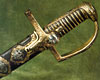
So it seems that statement made in book was just a general thought that leaves some doubts for the reader, but indeed we can agree horseshoes migh have been used in a process of making blade. But it still seems to me it is impossible to make entire blade only with horseshoes, not such good one as seen with hussars sabres anyway. So the thought of the author was just a bit to short to explain it properly IMO. And I see most of you left "natural forging" without comment... Katana: no there is no special talismanic, mythologic or historic connection with horseshoe in Poland except prejudice that hanged in house can bring a bit of luck, but it isn't such important for Polish minds to have any significance in art or craftmenship. And yes, you can see the sign of horseshoe on few Polish coat-of -arms, but only on few ones. There are also many other different symbols and objects used in very rich Polish heraldy, and all depends on family history or taste of noblemen, so the plot won't take us far that way - sorry. The full inscription on the blade is IEZVS MARIA IOZEF DEVS SPES MEA where "V" is made as "U" - it is easier to engrave or stamp, and "I" as "J". It means in English "JESUS MARY JOSEPH, GOD IS MY HOPE". Regards! |
|
|
|
![]() |
|
|