![]() |
|
|
|
|
#1 | |
|
Keris forum moderator
Join Date: Aug 2006
Location: Nova Scotia
Posts: 7,261
|
Quote:
But this is part of my argument for this NOT being such a keris. None of this type of representation (figurative), either dutch or Indonesian, appear in Naga Sasra's dress. If we look at the "touristy" dress that formed in Bali we also see very figurative designs such as a greatt big Kala face. Fancy and figurative seems to be what the European mindset wanted. It is also true, i think, that East jawa and Madura presented quite alot of nice wood carving in their traditional keris dress, so i am not inclined to immediately believe that this is a design created for export. It certainly could have been, i just don't see anything that implies it. BTW, i don't think anyone was pointing your way particularly for starting the idea that this might be a tourist piece. I believe Naga Sasra began his thread with the thought.
Last edited by David; 24th August 2006 at 03:54 PM. |
|
|
|
|
|
|
#2 |
|
Member
Join Date: Dec 2004
Location: Sweden
Posts: 1,637
|
David,
Could you please either show us a picture of an East Javanese carved sheath or give a page referral in any of the Keris books? I only follow you on the Maduran sheaths? Michael |
|
|
|
|
|
#3 |
|
Keris forum moderator
Join Date: Aug 2006
Location: Nova Scotia
Posts: 7,261
|
Sorry for the confusion Michael, i wasn't referring to sheaths necessarily when i mentioned nicely carved dress. There are some wonderfully carved East Javanese hilts though. You are probably right, richly carved sheaths are more the style of Madura than East Jawa. I think what is probably swaying me towards an East Jawa origin for this keris is that the hilt seems so, though i think this form also shows up in Madura. Of course that is probably a bad indication to follow since Naga Sasra has informed us that the keris fits badly and probably isn't original to the sheath. Still an interesting mystery.
|
|
|
|
|
|
#4 | ||
|
Member
Join Date: Dec 2004
Location: The Netherlands
Posts: 1,209
|
David,
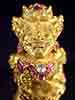
Van Duuren is mentioning two things. The military ukiran the maduran developed after being honoured for their help to the dutch army. I add a picture of such a ukiran below. That is such a ukiran referring to: Quote:
Quote:
The keris Naga Sasra shows us has such an equal appearance as those keris. As i wrote before, here in Holland those keris come up from time to time. Mostly the usual "standard" soldiers keris with lying lion on the wrangka and a male or female ukiran, but sometimes in a complete different dress but still recognizable as a soldiers keris. I prefer to speak about "soldiers keris" and not about "tourist keris". For me a tourist keris is a complete different category. |
||
|
|
|
|
|
#5 |
|
Member
Join Date: Aug 2006
Location: Italy
Posts: 928
|
I agree with Henk.
I add another "soldier" ukiran's picture |
|
|
|
|
|
#6 |
|
Member
Join Date: Dec 2004
Location: The Netherlands
Posts: 1,209
|
Marcokeris,
That's also a lovely example of such a maduran ukiran. Are there two lions in the shield on the belly? If so it is possibly the dutch royal weapon. |
|
|
|
|
|
#7 |
|
Keris forum moderator
Join Date: Aug 2006
Location: Nova Scotia
Posts: 7,261
|
Henk and Marcokeris, thanks for posting these examples. I agree with you Henk that these "soldier's keris" are in a different catagory to what we often think of as a "tourist" keris, although i don't particularly like the term "tourist" keris in general as it is usually only meant to describe low quality keris, some of which might actually serve some ethnographic service such as a part of wedding attire and not actually be meant for export.
I have seen these "soldier's keris" in all levels of quality and i think they are certainly important in the overall history of the keris. I wouldn't mind finding a good example one day for my own collection. However, i still fail to see how Naga Sasra's keris is in any way "equal" to these "soldier"s keris" other than the fact that they both have carved sheaths. I see no similarities here.
|
|
|
|
|
|
#8 |
|
Vikingsword Staff
Join Date: Nov 2004
Posts: 6,378
|
Possibly we should look at the basic elements in this dress ; the gambar has an extremely pronounced mid-rib which is an element I have not seen on Maduran gambars .
The scabbard carving is representative of simple form and extreme *repetition* ; another element that I have not seen on Maduran work . The extreme width of the gambar doesn't seem in keeping with Madurese work either nor does the shape . Your humble moderator would deeply appreciate some postings of Cirebon kerises so that he might compare forms . Perhaps the example in Frey III and Naga Sasra's keris are simply anomalies but that answer really doesn't satisfy . Rick |
|
|
|
|
|
#9 |
|
Member
Join Date: Dec 2004
Location: Sweden
Posts: 1,637
|
Here is a sample what I had in mind when I wrote influence of a Cirebon/Tegal Ganesha hilt among others. It's from a friend's collection so I don't have it in bigger size.
Michael |
|
|
|
|
|
#10 | |
|
Member
Join Date: Aug 2006
Location: Italy
Posts: 928
|
Quote:
|
|
|
|
|
|
|
#11 |
|
Vikingsword Staff
Join Date: Nov 2004
Posts: 6,378
|
Back to the dress in question ; the wrongko of many keris is considered to be influenced by the shape of a boat .
In Naga Sasra's wrongko I see the influence of (or resemblance to) wings . Are keris from Cirebon so rare that we have no other examples in our collections save one ? |
|
|
|
|
|
#12 |
|
Member
Join Date: May 2006
Posts: 7,134
|
In respect of the example posted by Naga Sasra.
The handle is a not particularly scarce Madura style, that can also be found on some North Coast and East Jawa keris, however, when this occurs it is probably a keris owned by a person from Madura, as Madura influence and people have spread into these areas for hundreds of years. Madura in modern Indonesia is a part of East Jawa. The mendak is Central Javanese, probably from Solo. The blade is an older one of possibly Tuban, or Pajajaran , or some other similar classification, but this is too difficult to be definite about without having it in the hand. The wrongko is interesting. It has been carved as a highly decorative, non-traditional form. Execution appears to be in the style of the carvers of Suminep , Madura, and it may have originated from there, however, I feel it is more likely that it was carved by a Suminep craftsman living in the area around Surabaya,and as a commercial endeavour. As to what the motif may represent, since this is a non-traditional motif, and cannot be compared to examples of motifs in other examples, or mediums, the only person who could really say what it represents is the person who carved it. To my eye, and taking into account traditional values, I think I am looking at a representation of a coconut palm tree. However, as I say, this is only a guess that cannot ever be confirmed. It could well be his mother in law's eyebrows, for all I know. Regarding keris from Cirebon, Tegal, Banyumas, and other parts of the Island of Jawa. Yes, examples of keris from these areas are very, very scarce. During my life I have had thousands of keris in my possession, and I have seen and handled many thousands more. Amongst these thousands of keris , I could probably count the old examples of complete keris from areas under the influence of Javanese courts other than Surakarta and Jogjakarta ,and excluding East Javanese examples, on the fingers of one hand. Since the end of WWII, Surakarta and Jogjakarta dress has dominated all Javanese keris dress style. |
|
|
|
![]() |
|
|