
|
 24th January 2006, 01:55 PM
|
#1 |
|
Member
Join Date: Jan 2006
Posts: 936
|
 WOOTZ or SHAM?
As we know, Dr. Verhoeven does not consider sham to be true wootz, however many collectors do. And as it's relatively easy to recognize network and ladder types, it is difficult to make a clear distinction between stripy, water and wavy patterns, as all three can be labeled as sham (just look at the multitude of individual opinions from this post:
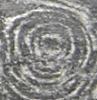
http://www.vikingsword.com/vb/showthread.php?t=38 So here are two blades. Both have longish threads, more evident on Sword_One, with one particular thread looking like a half-circular brush stroke (see second picture). I even thought it was painted when I saw it first time. The second sword has similar, but less wilder threads. Both can be seen as sham, but considering relative high contrast could one see them as wavy/water type? And how do you make an informative "guess" which is which? P.S. Glad to be joining so many dedicated and knowledgeable people at The Forum. This is my first post. Looking forward to learn and to share. Alex |

|

|
|
24th January 2006, 04:29 PM
|
#2 |
|
Member
Join Date: Feb 2005
Posts: 133
|
Hi,
Nice blades. A definitive way of characterizing/naming patterns still needs work as it is so objective and different parts of a blade often shows different patterns..some tight and some more wavy. As for Sham...check out my reply on the other link. 
|
|
|
|
|
24th January 2006, 06:01 PM
|
#3 |
|
Member
Join Date: Mar 2005
Posts: 116
|
hi
the sham pattern can be produced with both hyper and hypo eutectic steel.... ofcourse.... my idea of a sham pattern is where the waterings are very straight... the pattern is controled by how the igot is drawn out.... if you want a very straight pattern... simply use hammers with very flat faces..... it takes longer to make ... now for real interesting waterings.... you forge the blade out with round face hammers.....and do lot's of fullering to draw the ingot out.... ... now the drastic deformation of the surface helps the waterings to become much more chaotic.. its really more about pattern control and forge techniques..... however....i'm not sure about the swoopy patterns.... i've gotten weird pattern when i etched blades that weren't totally degrease.... but that a different matter.. Greg |
|
|
|
|
24th January 2006, 06:45 PM
|
#4 |
|
Member
Join Date: Feb 2005
Posts: 133
|
Hello,
I guess it all boils down again to how one defines a Sham pattern.
|
|
|
|
|
24th January 2006, 07:14 PM
|
#5 |
|
Vikingsword Staff

Join Date: Dec 2004
Location: The Aussie Bush
Posts: 4,749
|
 Welcome
Welcome to the forum, Alex. Hope you enjoy your time here.
As you have already seen, some of our members are very knowledgeable about steel patterns. Ian. |
|
|
|
|
24th January 2006, 07:50 PM
|
#6 | |
|
(deceased)
Join Date: Dec 2004
Location: East Coast USA
Posts: 3,191
|
Quote:
OK,Sham=Something false or empty that is purported to be genuine; a spurious imitation or A decorative cover made to simulate an article of household linen and used over or in place of it: Oh sorry you mean a steel pattern I should be a sham ed  Sorry I just couldn't help myself Sorry I just couldn't help myself Lew |
|
|
|
|
|
24th January 2006, 11:37 PM
|
#7 |
|
Member
Join Date: Dec 2004
Location: Greensboro, NC
Posts: 1,099
|

There is a very wide variety of opinions about the classification of wootz, what is wootz, how do you classify, etc. I think it can even be split into technical aspects and collector aspects. Speaking from a collector aspect, Sham wootz is most often associated, again from a collectors perspective, with Turkish or Syrian wootz or shall I say that this pattern of wootz is most often associated with those regions. I believe Sham is another word for Syrian. As Greg points out, the sham pattern is mostly recognized as long flowing lines without circular distortions, partial rungs or full rungs. I am afraid I am away and am unable to post an example to illustrate.
It is hard to tell from your example but it appears that your first example has some dead spots or inactivity in the patterning most probably due to a failure to control the heat during forging. In the sections where the pattern is visible, it seems to not exhibit the typical sham pattern. The second example also does not appear to be an example of sham. A favorite topic of mine so welcome to the forum and keep the wootz posts coming! |
|
|
|
|
25th January 2006, 05:13 AM
|
#8 |
|
Member
Join Date: Nov 2005
Posts: 189
|
I thought sham meant plain steel that was etched to look like it was wootz/pattern welded?
To photograph patterns in steels, it is often easiest to get a uniform reflection by taking the photo with the blade outside, positioned in such a way as to reflect an overcast sky - you get a very clear shot of the pattern if the blade is lit with uniform, diffuse light. The parallel lines (to the right) in the middle photo indicate that blade might be pattern welded steel, but the photos are indistinct enough to make any attribution a guess. |
|
|
|
|
25th January 2006, 02:31 PM
|
#9 |
|
Member
Join Date: Mar 2005
Posts: 116
|
after rereading some of Al-Kindi's words on arabic swords.... i still feel that we are getting too strict with our definitions of wootz/poulad steel. I'm still leaning towards all the crucible steels made in the middle ages, wootz tradition as being wootz steel.... this includes even the lower carbon hypo eutectic's with good pattern..
it is a good matter for discussion..... i'm personally open minded to all of it.. ask yourself these questions.? -- do you think that if the Indian steel makers made a hypo eutectic ingot, and forged it into a sword.... that they wouldn't call it wootz ? specially if it had a watered pattern? -- would it be more likely that they'd have a catagory of quality for such wootz.... noting it's difference from the high carbon wootz.... specially in terms of observable pattern.. !! -- remember......they had no way to tell the carbon level of this wootz..... (no mass spectrometer etc ) maybe i'm getting too excited over nothing..... but i feel that our modern definition is getting away from the middle ages tradition..... as i have mentioned before if sham isn't wootz......... then what about the dendritc pattern.... i've seen this on indian swords..... where there is very little roast time and the watering is very grid like....... are these to be excluded too! i hope there is to be more open dialog on this topic... it's important to discuss this Greg |
|
|
|
|
25th January 2006, 03:23 PM
|
#10 |
|
Member
Join Date: Mar 2005
Posts: 116
|
when reading Verhoeven's study on " the key role of impurities in damascus blades" .... he bases his idea on wootz from the Zschokke blades..... yet he totally discounts the analysis of sword no. 8 because it was hypoeutectic.....
Before this moment in time..... that sword was concidered wootz !!... obviously so because it was a selected sample for testing and characterizing wootz steel..... -- it must have showed typical wootz pattern with a watered surface !! --. So ....if the observable features of this sword fooled the scientists in this study.... do you think that the Ancient Indians could be more thorough ?? and discriminatory .... now after being discluded from the acceptable ranges of wootz steel is this study.... it is here by declared " Not Wootz " at university, they drummed it into my head to ask the question " Why "..... and to test all theories for repeatability.... the modern definition of wootz is holding less and less water, for me ! Greg |
|
|
|
|
25th January 2006, 03:42 PM
|
#11 | |
|
Member
Join Date: Nov 2005
Posts: 189
|
Quote:
I think we should revisit some of the earlier descriptions of the watering - Didn't al-Kindi desribe several types? One of those is quite possibly a reference to the lower carbon variety. And the sword in the bottom pic looks like it might be of that ilk (just to keep to the initial subject)... |
|
|
|
|
|
25th January 2006, 05:19 PM
|
#12 |
|
Member

Join Date: Dec 2004
Location: Europe
Posts: 2,718
|
Hi Jeff, Greg and Ann,
No you, Greg and Ann are not the only ones interested in this subject – I am too. Only my knowledge about the subject is far too little to join the discussion, other than ask the stupid questions – so that is what I will do. How about one of you writing a ‘Wootz for Dummies’, that might help many of us. Is it so, that in theory sham has less carbon than 0.8, and wootz has more than 0.8? When I write ‘in theory’ it is be course of what Greg wrote. I have understood that the smith, if the difference of carbon is not too big, can make a blade after his own wishes, is that correct? Earlier this was of course impossible, as they could not measure the carbon. When the crucibles were made ready for melting, this of course would mean that none of them would be exactly the same, as the amount of organic stuff you put into each could/would differ from crucible to crucible, also meaning that the man maintaining the work had to be very accurate. Some were, others were not. This could explain what I have read about the Arabian merchants having people living in India to check the crucibles before they were exported – as some were of a lesser quality. |
|
|
|
|
25th January 2006, 06:29 PM
|
#13 |
|
Member
Join Date: Mar 2005
Posts: 116
|
i'll tell you a story..... when i was starting to make crucible steel... i was testing the boundaries of wootz.... so i deliberately made an ingot to have a carb level bellow 1%.... ( a sort of control experiment)
I forged it out.... heat treated and etched in the standard way..... suprised to see a nice watered pattern come out with a very short etch time.... ... confused, i shuffled this blade to the back of the pile thinking that i either -- goofed up the calculation for carb levels or... extra carbon was borrowed from the crucible... -- anyhow.. i gave it to a friend and didn't look back.... now... Jeff had posted a knife awhile back that had a wootzy look.... but he'd stated that it was too low a carb to be wootz..... yet it looks identical to an Indian blade i've seen..... so what ? well if Jeff didn't have that blade tested, would he have known to catagorize this blade as " not wootz "..... -- is this another No.8 sword ??? so what it boils down to is...... are we to split the hypoeutectic watered crucible steel (low carbon steel) off of the definition of wootz (basically following verhoeven's lead and discounting sword no 8's existence) or are we to look at the whole sample of watered steels from the middle ages and be inclusive of No 8 i'm not sure i can come up with a definition of wootz at the moment... if anything, I think it is just a crucible steel that is made in the wootz tradition of the middle ages... I believe Jeff's point is excellent.... we should try to revisit Al-Kindi's classifications of watered steels... and look here for some answers Greg |
|
|
|
|
25th January 2006, 10:19 PM
|
#14 |
|
Member
Join Date: Apr 2005
Posts: 3,255
|
How about the functional aspect? Would a wootzy blade forged from a low carbon ingot live up to expectations under martial use?
Greg, did you ever tested edge holding of your experimental blades? Regards, Kai |
|
|
|
|
26th January 2006, 12:45 AM
|
#15 |
|
Member
Join Date: Mar 2005
Posts: 116
|
yes the low carb wootz.....as long as its above .6% carb would make an excellent knife... ... i did not test that particular blade for edge holding but whenever i finish quenching a blade...... i test its hardness by running a small file on its edge......... if the file skates on the edge without biting the metal.....it is then very hard !! ( around 60rc) and off to the temper oven it goes to relieve some hardness and give it some toughness...
I believe the low carb wootz would do well in martial use... Greg ps.....the high carb wootz blade do hold a nice edge |
|
|
|
|
26th January 2006, 01:16 AM
|
#16 | |
|
Member
Join Date: Nov 2005
Posts: 189
|
Quote:
|
|
|
|
|
|
26th January 2006, 10:57 AM
|
#17 |
|
Member
Join Date: Jan 2006
Posts: 936
|
What a wonderful welcome to the Forum. Thank you all who responded. Now I have more questions than before... and it's a good thing
Greg: Your reflection on the wootz/sham issue is one of the brightest I have ever came across (well, after Ann's, of course ). And I can not agree with you more. It sounds so logical - it's either wootz or mechanical !!! ... (or am I way off changing the conventional wisdom on my second post??).Rick: Very short and sweet description of sham pattern. And I'll keep wootz pictures coming. It's the ONLY thing I collect, and amazingly know so little about Also, the pattern on my blade looks more Chunky than Stripy, and if Manfred Sache categorizes Stripy damask as Sham, should the Chunky be qualified as such, IF AT ALL? (Ann, any comments?)MORE IMPORTANTLY: If it's not Sham, what do you think it is? Jeff: I did not think it's a mechanical pattern, and even with all that "chunks" and blank and empty areas I inclined toward stripy (sham) wootz, but now I am not sure. Perhaps someone will be able to identify it despite low quality photos (still can not get them right with my Kodak 3MP).OK, now we're back where we started. The One who said: " Wootz is an amazing and magical thing" was right. Also, Rick - do you know where can I get Manfred Sache English edition? All I could find is German one on Amazon. Thanks to all!!! |
|
|
|
|
26th January 2006, 02:12 PM
|
#18 |
|
Member
Join Date: Mar 2005
Posts: 116
|
Hi
yes....currently my thinking is leaning towards being historically accurate..... after all, why should we make new standards for crucible steel when there were already some in place... i realize that what i'm trying to put forth is against the grain but something has to be said for crucible steel.... from what i understand, wootz/poulad was crucible steel made in the middle ages tradition. I believe this post to be important to collectors, also !!! -can you imagine if your shamshir, tulwar, kilij, with fabulous waterings... truly wonderful crucible steel...... if it was tested for carbon level and was found to have .8%....... under the current definition it would be declared " Not Wootz/poulad " -- the value would be much less.... but yet....it still is an excellent steel, strong enough to do well in combat.... beautiful to look at.... and has interesting waterings -yes....it is abit troubling..... so this is why we have to ask questions when scientists come up with subcatagories and redefine materials. -from what i've been reading and rereading... the ancient catagories of crucible steel was about the surface waterings (color, pattern, region etc) maybe i'm over reacting.... but it is definitely worth looking into Greg those blades are strange.... sometimes you can have some non-patterning surface decarb... and this will etch into black blobs.... but can be ground out... - it maybe that the etch was off...... sometimes the etch will do crazy things - lastly...... this is a long shot...... but it maybe that these blades were roasted for a very long time dissolving some of the dendritic network..... i've noticed in the past that long roasts will give you a larger and wandering pattern..... much the opposite of the dendritic look.. so...it maybe that....but i'm truly reaching here..... .. way out ! |
|
|
|
|
26th January 2006, 03:21 PM
|
#19 |
|
Member
Join Date: Nov 2005
Posts: 189
|
The new photos make me think it is not mechanical damascus, too - looks more like crucible steel to me. I'm thinking the blobs are probably decarburized areas as well, the patchy look (sharp transitions & shapes that are random, not streched out or tied tightly to the blade geometry) is consistant with a decarb layer that was not fully removed in the finishing process.
|
|
|
|
|
26th January 2006, 04:06 PM
|
#20 |
|
Member
Join Date: Dec 2004
Location: Europe
Posts: 2,718
|
What would you call this?
|
|
|
|
|
26th January 2006, 04:07 PM
|
#21 |
|
Member
Join Date: Dec 2004
Location: Europe
Posts: 2,718
|
And this?
|
|
|
|
|
26th January 2006, 04:24 PM
|
#22 |
|
Member
Join Date: Dec 2004
Location: Greensboro, NC
Posts: 1,099
|
Alex,
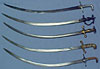
In regards to Sasche book, have a look on Ebay. It pops up from time to time in the English version. With the extra pictures, it is still hard to make out the pattern of the steel due to the areas of inactivity. While I am confident both blades are wootz, in as far as how a collector would classify the watering, but very hard to say if it is a shami pattern or not. From what I can tell in the areas where the pattern does show up, it seems to have a bit more activity than one would expect with typical sham wootz. Jens, Lovely blades you post there. I will take a crack at these speaking strictly from a collectors viewpoint. The first example has the very tight, fine, low contrast pattern most often associated with India. In the next picture, the two swords to the left exhibit the high contrast, high activity patterning that is most often associated with Persia while the final example to the right is what I would call a classical example of Indian wootz. Tight, fine pattern with low contrast. |
|
|
|
|
26th January 2006, 04:58 PM
|
#23 |
|
Member
Join Date: Dec 2004
Location: Europe
Posts: 2,718
|
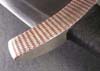
The reason why I show these three dagger blades is be course the first one has these dark blobs as well as watering, but the others don’t.
What are thise ones then? They are from tulwar blades. |
|
|
|
|
26th January 2006, 09:30 PM
|
#24 |
|
Member
Join Date: Dec 2004
Location: Greensboro, NC
Posts: 1,099
|
Jens,
The last two examples you post are examples of mechanical damascus or pattern welded steel. The example on the left, with the widely scattered pattern, is according to Figiel, from peining the blade. Perhaps he means tapping on the tang will create these distortions. The example on the right is a good example of an active watering that is the result of pattern welding. |
|
|
|
|
27th January 2006, 01:28 AM
|
#25 |
|
Member
Join Date: Mar 2005
Posts: 116
|
Hi.. I have seen those exact blotches on some of my first blades ... .. i'm not quite sure why the pattern is like that.... it may need to be re-etched ... or may have been a problem with the last stages of lower temp heat cycling... (some spots may have been overheated abit.... and need some cycles to repattern )
-- in past experiments.... i kept etching till those spots start to pattern....but the problem is that the other places where the etch was initially decent ...now is overly etched and looking cruddy... -- if you change solutions and acids......sometimes this can help..and a thorough degreasing -- or bring the blade to a higher polish... (high grit) and use only a quick etch... this is a less durable etch... but allows you to see fine detail Jens.... those are some marvelous blades !! and i totally agree with the bottom being patternwelded.. take care Greg |
|
|
|
|
27th January 2006, 03:57 PM
|
#26 |
|
Member
Join Date: Nov 2005
Posts: 189
|
On the patttern welded blades, the left has a low number of layers, the right a high number. Unevenness in the surface from hammering (that is later filed out) results in more layers being exposed on the surface, which is what Figiel must have been referring to when he spoke of peining.
Another factor which influences the way patterns show up on these blades is the state of hardness of the metal - A blade or area that has been fully transformed in the hardening process will etch more slowly than an area that was not hot enough or cooled too slowly to harden properly. |
|
|
|
|
27th January 2006, 06:29 PM
|
#27 |
|
Member
Join Date: Mar 2005
Posts: 116
|
Jeff..... i'd buy you a beer for that answer
i believe your right on !! and it makes sense..... Greg |
|
|
|
|
27th January 2006, 07:18 PM
|
#28 |
|
Member
Join Date: Jan 2005
Posts: 485
|
Hi Greg and Jeff,
I think I am in the presence of greatness!!! please carry on as i am an enraptured spectator! B |
|
|
|
|
27th January 2006, 09:35 PM
|
#29 |
|
Member
Join Date: Dec 2004
Location: Europe
Posts: 2,718
|
Hi All,
Thank you for your answers. I too like wootz very much, but I also have the feeling that many of the pattern-welded patterns are underestimated. The explanation of the difference shown in the two pictures in mail #23 is very interesting. |
|
|
|
|
28th January 2006, 05:06 PM
|
#30 | |
|
Member
Join Date: Nov 2005
Posts: 189
|
Quote:
Pattern welding gives the smith a much broader range of design elements, and can result in an incredible array of appearances in the finished surface. Some of the patternwelded rifle barrels in Figiel's "On Damascus Steel" are of mind-numbing complexity, with as many as ten or twenty operations on the steel to develop a specific pattern, before the metal is even made into something! Although wootz gives less options in design, it offsets that by being rare, cool and mysterious - as modern smiths get more used to working with wootz I'm sure we'll do more with the patterning potential, there is certainly some room to explore there. |
|
|
|
|
 |
|
|


 Linear Mode

