Quote:
|
Originally Posted by colin henshaw
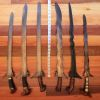
A puzzlement to me is the lack of a protection for the hand on the sword hilt, not even a cross-guard... Does anyone have ideas why this is so ?
|
Guards don't come without cost. They can make the sword less convenient to carry, which matters if you wear it every day, but fight with it every few years. Guards can snag on clothing when drawing the sword, snag on your own or your opponent's clothes when fighting, get caught on shields, and offer handles for an opponent to disarm you.
If you fight without a shield, with your weapon arm forward (so your weapon is both your offence and defence), then a guard becomes useful. Even if you don't plan to block with your guard, an opponent's blade can slide down yours into your hand, and stopping that is useful. If you plan to keep your weapon hand behind your shield, block blows with your shield while counter-cutting with your sword to their sword arm, you don't need a guard. (And you don't want a long/bulky guard, since you'd have to move further to get past your own shield.)

 2nd March 2016, 10:56 PM


 Threaded Mode