
|
 17th September 2014, 03:23 AM
|
#1 |
|
Member
Join Date: Sep 2012
Posts: 476
|
 Insights on unusual kampilan?
This kampilan ended on ebay today.
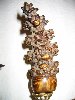
I found it interesting that the hilt is carved of banati wood (if that's the correct term.) Assuming for the sake of this discussion that the mounts are silver, and not some other white metal, what might one infer about it-- the quality, date, etc. The description said it was about 40" long with a 28" blade, I believe. Ian wrote an outstanding typology on kampilan hilts awhile back (I think it was Ian?) Does anyone have a link to it? I look forward to learning something new. The pics seem to be too large to upload, here is a link: http://www.ebay.com/itm/KAMPILAN-MOR...p2047675.l2557 |

|

|
|
17th September 2014, 05:00 AM
|
#2 |
|
Vikingsword Staff

Join Date: Dec 2004
Location: The Aussie Bush
Posts: 4,738
|
Oliver:
Thanks for posting this one. I had been following the auction and was outbid for it! Are you the lucky owner now? I had exchanged emails with Battara several days ago about his thoughts on whether this was a silver-clad hilt--neither of us were sure what the metal was. Previously, I've seen a couple of silver mounted kampilan, and they are certainly unusual. The use of banati wood on this one, also uncommon, would suggest that it is a high quality piece, although I think the silver work (and perhaps the whole hilt) are early 20th C while the blade could be earlier. As far as a classification for kampilan, I did write a piece about 10 years ago on the old forum. Will try to find it again. Ian. Here is that old discussion: Towards a classification of kampilan Last edited by Ian; 17th September 2014 at 05:09 AM. Reason: Added link to the old forum |
|
|
|
|
17th September 2014, 05:16 AM
|
#3 |
|
Member
Join Date: Sep 2012
Posts: 476
|
Thanks, Ian!
No, I'm afraid I'm not the owner, lucky or otherwise. But I am trying to learn more about the subtleties of Moro work. There was also a whalebone-hilted kampilan out there last week which was very interesting. Other than the condition of the blade, what are the factors which (potentially) make it earlier than the hilt? BTW, have you published that classification paper? |
|
|
|
|
17th September 2014, 08:21 AM
|
#4 |
|
Member
Join Date: Aug 2007
Location: Germany, Dortmund
Posts: 9,788
|
Beautiful kampy, thank you for posting it Oliver!
 On one picture from the auction is seen a 20 centavos coin for the "eye" at the handle which is certainly from silver. And this coin show the same varnishing/oxidation like the other metal plates so it could be that all metal attachments are from silver. On one picture from the auction is seen a 20 centavos coin for the "eye" at the handle which is certainly from silver. And this coin show the same varnishing/oxidation like the other metal plates so it could be that all metal attachments are from silver. Regards, Detlef |
|
|
|
|
17th September 2014, 12:56 PM
|
#5 | |
|
Vikingsword Staff
Join Date: Dec 2004
Location: The Aussie Bush
Posts: 4,738
|
Quote:
No, those thoughts were only posted on the old forum for discussion. I was hoping we would have more provenanced pieces before disseminating the ideas more widely. It is so hard to find examples of kampilan that have been reliably pinned down to a particular region or major tribal group. As to the age of this blade, I was just going on its general appearance. Jose had thought that the style of decoration was perhaps mid-20th C, but the general condition of the blade seemed similar to some of my 19th C pieces. Nothing more specific than that. Ian. |
|
|
|
|
|
17th September 2014, 01:22 PM
|
#6 |
|
Vikingsword Staff
Join Date: Dec 2004
Location: The Aussie Bush
Posts: 4,738
|
Just to put this example in line with my earlier analysis, here are pictures showing the geometry of this kampilan around the central axis of the blade. In terms of the proposed classification, this would be a Type 1 kampilan in all respects, and possibly from the Lake Lanao region of the Maranao.
The top picture shows the typical uptilted hilt, with an "eye" disc and radiating lines (no "saddle" visible but may be obscured by the silver work in that area). The lower picture again shows the mid-line of the blade passing through a notch immediately below the "spike" at the tip. |
|
|
|
|
17th September 2014, 03:43 PM
|
#7 |
|
EAAF Staff
Join Date: Dec 2004
Location: Louisville, KY
Posts: 7,407
|
I would also say Maranao based on the okir work. Yes I say possibly later silver work (silver based on what I can see of the patina) with an early 20th century blade.
Better close ups and metal testing would pin things down better. |
|
|
|
|
17th September 2014, 05:12 PM
|
#8 |
|
Member
Join Date: Sep 2012
Posts: 476
|
Thank you, Ian, Detlef and Jose.
I'm wondering what would distinguish the dating of applied and engraved (presumed) silver plates. Was work like this not done in the 19th? Is the absence of an applied iron guard characteristic of a particular period, a particular people, or a matter of personal taste? Jose, I think you would be the guy to ask whether the semicircular border motifs are done with a graver or a punch? Time permitting, can you expand somewhat on why you've dated the blade as you have? |
|
|
|
|
17th September 2014, 07:26 PM
|
#9 |
|
Vikingsword Staff
Join Date: Dec 2004
Location: The Aussie Bush
Posts: 4,738
|
Here are a couple of provenanced ones from Herbert Krieger's, The Collection of Primitive Weapons and Armor of the Philippine Islands in the United States National Museum, published by the Smithsonian Institute, 1926. The top picture is Plate 7 from Krieger's work. Below that are kampilan numbered 1, 4 in that plate, showing the long axis of the blade passing through the hilt.
The hilt of #1 is very primitive and unadorned, which makes classification difficult. This kampilan was captured by Captain J.J. ("Black Jack") Pershing during a punitive expedition in 1903; it is labeled "Moro. Lake Lanao. Mindanao." This one lacks the eye and radiating lines on the hilt, but it does have a saddle. Despite missing the eye and radiating lines, this one may have more in common with an uptilted Type 1 hilt, than a Type II or Type III hilt. The kampilan labeled #4 is also from the Lake Lanao region of Mindanao. I have rotated the image and added the long axis of the blade to show that it is a typical Type 1 hilt. So far, I have yet to see a well provenanced Maguindanao kampilan. Anyone out there like to share some pictures of a Maguindanao kampilan? Ian. |
|
|
|
|
18th September 2014, 04:31 AM
|
#10 |
|
Member
Join Date: Sep 2012
Posts: 476
|
This kampilan was sold at auction in 2013, it was deaccessioned from the John Woodman Higgins Armory Museum in Worcester, MA. It has a strong provenance from an American army officer who served in the Philippines between 1898-1899. It also displays the Type I Maguindanao hilt characteristics you listed above, Ian. Unfortunately its owner was posted in Jolo and several other locations in addition to Maguindanao and was not specific about where he acquired it.
http://www.auctionflex.com/showlot.a...enum=1&lang=En Last edited by Oliver Pinchot; 18th September 2014 at 04:43 AM. |
|
|
|
|
18th September 2014, 03:58 PM
|
#11 |
|
Vikingsword Staff
Join Date: Dec 2004
Location: The Aussie Bush
Posts: 4,738
|
Thanks Oliver. Yes, it is hard to pin down just where some of these items came from that were brought back from the Spanish-American and Philippine-American conflicts. The US troops got around quite a bit and high ranking officers received gifts from many parties--not all swords were picked up on the battlefield.
I've attached pictures (below) of the long axis of this kampilan. Actually, I think this one is closer to a Type II hilt, and it's interesting to look back at my old post and see a very similar hilt (with a similar scrolled guard) that was classified then as a Type II hilt -- see Figure 5, example on right. Here is the description of the present kampilan from the auction: "A MORO KAMPILAN SWORDThere is reference here to the General having served in Jolo and Malsbang. I think that Malsbang is probably a typo, and the correct spelling is Malabang. A search for Malsbang turns up an article in an old newspaper from California (San Francisco Call, 17 April 1902) that reports the killing of an American soldier in the Lake Lanao region and the dispatch of a punitive expedition to arrest the murderers. There destination was near Malsbang. There is no mention of William Sage in the article. However, if Malsbang is actually Malabang, then the General would indeed have served in the Lake Lanao region and have come in contact with the Maranao. |
|
|
|
|
18th September 2014, 05:39 PM
|
#12 |
|
Member
Join Date: Sep 2012
Posts: 476
|
Yes, I see now. Type II it is, Ian.
I know that the record from the Higgins spelled it Malsbang, in a 1980s transcription of the original donors' (General Sage's grandsons) 1957 letter. Hardly a stretch to see where the S on the keyboard was struck in place of the A. Brigadier General Sage, at the time a captain, seems to have seen considerable action. He was actually stationed in the Philippines between 1898-1906, but I don't know if he was there for eight years consecutively. His grandsons donated several examples, including this kampilan, a datu's kris, and some barongs. Some were elaborately decorated, others were quite simple. |
|
|
|
|
18th September 2014, 06:57 PM
|
#13 |
|
Member
Join Date: Dec 2004
Location: Witness Protection Program
Posts: 1,730
|
don't know if this is much of a help, Ian.
here's a picture of a Maranao datu, Datu Pagi. notice the kampilan on the the left |
|
|
|
|
18th September 2014, 07:10 PM
|
#14 |
|
Member

Join Date: Dec 2004
Location: Greenville, NC
Posts: 1,854
|
Spunjer,
Looks like that kampie is in a scabbard...or is it just my old eyes??? The blade's tip seems to be rounded like a scabbard tip, yet at the same time I am seeing a 'gleam' off it, so may just be the exposed blade. Seems to be some sort of bands there as well. Your thoughts? |
|
|
|
|
18th September 2014, 07:55 PM
|
#15 |
|
Member
Join Date: Dec 2004
Location: Witness Protection Program
Posts: 1,730
|
enlarging the picture on my personal file, it appears to be one of those open face scabbards. i'll do some editing with the lighting later on to get a better pic
|
|
|
|
|
18th September 2014, 08:21 PM
|
#16 |
|
Vikingsword Staff
Join Date: Dec 2004
Location: The Aussie Bush
Posts: 4,738
|
Spunger:
Thanks for the photo. I enlarged it a bit and applied a central axis line over the blade. This kampilan appears to be a typical Type I although I cannot see the handle to determine if it has a "saddle." The scabbard appears to be an edge guard that does not completely cover the blade, but just the sharpened edge and the tip. I have a similar guard for an old panabas that is tied on with strips of cloth. This one might be tied on with twine. Ian. |
|
|
|
|
18th September 2014, 09:41 PM
|
#17 |
|
Member
Join Date: Sep 2012
Posts: 476
|
This example, with an interesting pommel type I haven't seen before, was posted by our own good forum moderator Rick, about 12 years ago. I am posting only two pics, but hope Rick will join the conversation and upload others. This seems to be a Type III, Ian. It certainly has a saddle. Also wondering whether anyone has ever nailed down where this form is from?
|
|
|
|
|
20th September 2014, 02:14 AM
|
#18 | |
|
EAAF Staff
Join Date: Dec 2004
Location: Louisville, KY
Posts: 7,407
|
Quote:
Second, the manner of the design of the okir on the silver I have seen on later rather than earlier pieces. Early work does not have as much empty space as later examples. However the style of okir appears to me to be Maranao (though Maguindanao work is very close). Thirdly, the thickness of the silver plates I have seen on later pieces and not early ones. Early ones seem (so far) to be made of thinner sheets of silver. Fourth, regarding the blade, it seems to have characteristics of older examples like the method of the tapering profile, the "spike" at the distal end of the blade (worn down). I have not seen (so far) later examples with these details. Fifth: In addition to these points, the pommel section, and even to some extent the cross guard, appear to be in an older more traditional style. Also notice that the narra wood that this piece was made looks burled to me, again not often used by later pieces. These are my thoughts so far. However if anyone can show a different side, please educate me - I love to learn. 
|
|
|
|
|
|
20th September 2014, 03:50 AM
|
#19 |
|
Vikingsword Staff
Join Date: Dec 2004
Location: The Aussie Bush
Posts: 4,738
|
Thanks Rick. Here is your kampilan with the central axis shown. Because of the atypical pommel, this would be a Type IV hilt. The projection of the long axis of the blade on to the hilt suggests that this one would be closer to a Type II than a Type I orientation.
Ian. |
|
|
|
|
20th September 2014, 01:03 PM
|
#20 |
|
Member

Join Date: Oct 2007
Posts: 2,818
|
Here is an interesting one you can draw lines through Ian, a short curved type with provenance, captured 1898.
http://www.vikingsword.com/vb/showth...ighlight=santa Tempted to link others but I think it is against the rules to self link to my own items..... |
|
|
|
|
20th September 2014, 05:48 PM
|
#21 |
|
Member
Join Date: Sep 2012
Posts: 476
|
Thanks for detailing your analysis, Jose. I am struck by the similarities in dating the silverwork on Moro weapons with those of some groups in the Northern Caucasus.
Here is a kris with a pommel which seems to relate it to the kampilan pictured above-- quite similar in form and the wood looks almost identical. Would it be reasonable to infer that they are from the same area? Interesting that the spur-like form of the saddle on the kampilan hilt also appears on the kris, but since the pommel is rotated 190 degrees off from that of the kampilan, the spur instead serves to back the small finger. Last edited by Oliver Pinchot; 20th September 2014 at 07:17 PM. |
|
|
|
|
20th September 2014, 11:54 PM
|
#22 | |
|
Vikingsword Staff
Join Date: Dec 2004
Location: The Aussie Bush
Posts: 4,738
|
Quote:
Thanks for the information. Unfortunately simply drawing a straight line down a slightly curved blade does not capture the symmetry of the blade correctly, and over-estimates the departure from linearity of the hilt. I've reproduced the picture from your previous post below, with a line drawn from the midpoint of the tip to the midpoint of the forte right before the wooden guard, then extrapolated that through to the hilt. As noted, the extrapolated line may over-estimate the degree to which the terminal part of the hilt is uptilted. As drawn, this one has the characteristics of a Type I hilt. However, if we were to draw a curved line that traced the mid-point of the blade at each point down its curved length (difficult to do digitally with Photosphop), then we might get something closer to a Type II hilt. So I'm not sure which is the correct interpretation for this one. Ian. |
|
|
|
|
|
21st September 2014, 01:17 AM
|
#23 |
|
Member
Join Date: Oct 2007
Posts: 2,818
|
Thanks Ian,
It is a small cutlass sized sword captured from pirates according to the plaque. I finally bought a new home yesterday and will be in just before Christmas so my life can then unpack and hopefully get back to my books and other resources to better understand with some exactness where this sword was taken....but I need in roads to US military records from the time...a bit difficult knowing where to start being on the other side of the world. Gavin |
|
|
|
 |
|
|


 Linear Mode

