
|
 11th March 2010, 09:48 PM
|
#1 |
|
Member
Join Date: Jun 2009
Posts: 1,346
|
 Malay (?) keris from Ebay
Dear All,
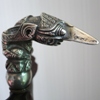
this one just ended on Ebay. It interested me, becouse I have never seen a Malay(?) sandang walikat sheet. Also the hilt form (Hulu Burung Serindit (?)) is not often seen. The blade seems to be in very good condition (if it is old). |

|

|
|
11th March 2010, 09:55 PM
|
#2 |
|
Member
Join Date: Jun 2009
Posts: 1,346
|
The hilt and sheath (Not so much patina?).
|
|
|
|
|
11th March 2010, 10:06 PM
|
#3 |
|
Member

Join Date: Aug 2006
Location: Italy
Posts: 928
|
 very good...i like a lot the hit, but also sarong and the blade seem nice (pamor tritik?) very good...i like a lot the hit, but also sarong and the blade seem nice (pamor tritik?)
|
|
|
|
|
11th March 2010, 10:27 PM
|
#4 |
|
Member
Join Date: May 2006
Posts: 7,255
|
I could be much more certain of my following comments were I to have this keris in my hand, however, here are my immediate impressions:-
1)--- blade is very recent Madura 2)--- hilt is recent Madura production 3)--- scabbard is an old one that has been reshaped to a sandang walikat form, and the piece of horn added to the top to allow perfect fitting of a blade that does not belong with this scabbard. This appears to be a recent, high class and deliberate attempt to decieve. |
|
|
|
|
11th March 2010, 10:43 PM
|
#5 |
|
Vikingsword Staff

Join Date: Nov 2004
Posts: 6,441
|

Hi Alan, the clues that triggered your impressions ; would you care to elaborate for our edification ?
Last edited by Rick; 11th March 2010 at 10:58 PM. |
|
|
|
|
12th March 2010, 05:24 AM
|
#6 |
|
Member
Join Date: May 2006
Posts: 7,255
|
Blade:- if it looks like a duck, it is a duck, and I've seen thousands of this particular breed of duck. This is not an exaggeration.
Handle:- I've seen this hilt motif in new hilts from Madura, and it looks like Sumenep work, but I'm not nearly so certain of this as I am of the blade; it could probably come from anywhere where good quality carving is still done. Scabbard:- I've seen the horn glued to the top of the wrongko to ensure good fit a few times, but never on anything old; the actual wood itself looks oldish, it may not have originally been a keris scabbard, but something else; the ivory buntut is perfect and obviously new, normally they're patinated and with a crack or two. As always when looking at pics, I could be wrong --- but overall I don't think I am. I tend to automatically distrust anything I have not seen before, and I've never seen anything at all like this. With all the keris I have seen and handled, I should have, if it is a genuine type. |
|
|
|
|
12th March 2010, 06:11 PM
|
#7 |
|
Member
Join Date: Dec 2004
Posts: 125
|
This keris is Peninsular. Almost certainly Terengganu and probably dating to the 40's or 50's. The hilt is known as a hulu burung serindit. The pamor of the blade is gigi hiu (shark's tooth). Sheath is made from angsana wood with a tanduk seladang (wild buffalo horn) throat. Hilt appears to be gigi (walrus ivory) but could be elephant. The sheath is extraordinary - I've seen more than a few of the so called "sandang walaikat" sheaths from Teregganu but all have been sundangs. This is the first normal keris I've seen with a s/w sheath. That said, I've seen maybe 3 or 4 examples of this hilt form and dozens of the pendokok in Terengganu examples. The blade also, while unusual in quality is not beyond the capability of the Malay pandai.
Note also that the keris was offered with two other better than average Peninsular pieces. A panjang with a typical Peninsular blade and another keris that appears to be an old Bugis example but with a classic Peninsular hilt. Sorry Alan, all due respect but this is no more Madurese than I am. 
|
|
|
|
|
12th March 2010, 07:55 PM
|
#8 | |
|
Keris forum moderator
Join Date: Aug 2006
Location: Nova Scotia
Posts: 7,303
|
Quote:
It's nice to get your perspective as someone deeply involved in Peninsula keris. I was also wondering about Alan's assessment, but frankly both you and he know more than i do so i wait to hear opinions. I also thought this was Peninsula work as well as i have never seen anything with this much Peninsula style coming out of Madura, but Alan has seen soooo much more of what comes out of Madura so i don't want to second guess him. 
|
|
|
|
|
|
13th March 2010, 02:12 PM
|
#9 |
|
Member
Join Date: Jun 2009
Posts: 1,346
|
Three more pics of the Hulu.
|
|
|
|
|
13th March 2010, 02:57 PM
|
#10 |
|
Member
Join Date: Aug 2007
Location: Germany, Dortmund
Posts: 9,788
|
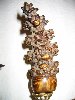
I think that the rare hilt form and the rare sheat have been the reason that this keris reach such a high price. The hilt material seems to be from hippo ivory (see the attached picture, the black spots along a line are clearly to seen). This is also the reason why this hilt don't show to much patina since this material keep long time the white surface.
|
|
|
|
|
13th March 2010, 04:03 PM
|
#11 | |
|
Member
Join Date: Aug 2006
Location: Italy
Posts: 928
|
Quote:
This is one i don't have in my collection...( in Indonesia is very difficult to find this Malay hit)
|
|
|
|
|
|
13th March 2010, 04:27 PM
|
#12 |
|
Member
Join Date: Jun 2009
Posts: 1,346
|
Hilt is the same. I just had difficulties to upload this picture, Sajen managed it.
An old thread about this form: http://www.vikingsword.com/vb/showth...ht=burung+hulu Last edited by Gustav; 13th March 2010 at 04:41 PM. |
|
|
|
|
13th March 2010, 04:29 PM
|
#13 | |
|
Member
Join Date: Aug 2007
Location: Germany, Dortmund
Posts: 9,788
|
Quote:
Marco, this hilt is from the keris in question, unfortunately not mine. |
|
|
|
|
|
13th March 2010, 06:48 PM
|
#14 |
|
Member
Join Date: Aug 2006
Location: Italy
Posts: 928
|
Sorry Gustav and Sajen you are right
 This kind of hit is also possible to see in mrs. Ghiringhelli work (arts of asia). Also in mr. Sharhum Yub's book (keris & other short weapons) there is this kind of hit.... and in many other works (mr. C. Le Dauphin, mr. Kerner M, mr Harsrinuksmo B, ...) |
|
|
|
|
13th March 2010, 09:27 PM
|
#15 |
|
Member
Join Date: Nov 2006
Location: The Netherlands
Posts: 2,238
|
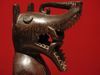
This one is depicted in David van duuren's "the Keris" and can be found on the website of the tropenmuseum under nr 3583.
+ picture comparing the two Last edited by asomotif; 13th March 2010 at 09:45 PM. |
|
|
|
|
14th March 2010, 12:42 AM
|
#16 |
|
Member
Join Date: May 2006
Posts: 7,255
|
Welcome back Dave!
We haven't seen you for a long time, and it so good to hear you voicing your opinions again. I really appreciate your input on this keris, because without it, I would not have taken the trouble to track down the original listing and the photos shown in it. The copied images that are published here are probably as good as copied images can be, but the originals in ebay are much more clear, and have given me an improved perspective. In this keris there is one really outstanding feature, and that is the method in which the pamor has been worked, the topographic relief of the pamor, and the presentation of the blade. This working method and treatment is so common in Madura blades as to be almost a copyrighted trade mark. To produce pamor of this type, the maker needs very considerable experience in producing heavily surface manipulated pamor. He needs years of experience, and he needs to have produced many blades with exactly this same type of pamor as the one we see in this blade under discussion. This blade has very well executed pamor. The man who made this blade had made many more of exactly the same pamor. This one was not his first, and it was not a one off. This being the case, I believe it would be reasonable to expect that somewhere, at some time, over the last 50 odd years I would have seen a similar blade, or photograph of a blade, that was able to be attributed to a region other than Madura, but I have not. All blades of this type and quality that I have ever seen were indisputably produced in Madura, or by Madura craftsmen working in another area. Admittedly, my on-the-ground experience is mostly in Jawa, Madura and Bali. I freely admit that my practical knowledge in keris from other areas is deficient. Because of this deficiency, I cannot argue against the possibility that this blade comes from the Peninsula, but from the available images I am absolutely immovable in my opinion that I am looking at a type of forge work, bench work, and surface preparation, with which I am extremely familiar, and that is Madura work. If we wish to place it in the Peninsula, perhaps the first thing we should do is to try to place it within a period, and then to identify the makers working during that period who were capable of the production of this pamor. It is possible that this could be the production of a Madura maker working in another area. I stress "possible". I do not have particularly detailed knowledge of Peninsula makers, but I have seen photographs of blades produced in the Peninsula during the last 50 years or so, and I have yet to see any work that even approaches the quality of this blade. Fifty years takes us back to mid-20th century. I doubt that any keris making was being done in the Peninsula in the period between about 1940 and 1950. But whoever made this blade had been producing blades with similar pamor and of similar quality for a long time. So that takes us back to pre-1940. I am under the impression that pre-1940 Peninsula blades were not given heavy treatment with sulphur and salt, but I believe that it is clear from the images that this blade is both recent --- note the clear file marks --- and heavily etched and stained to display topographic relief :- both traits that are the norm in Madura and Javanese blades, but I understand, extremely rare in Peninsula blades. In fact, respected people with much more knowledge than I have in the keris of the Peninsula have assured me that this practice is virtually unknown to the Peninsula keris. So, if it was not produced in the Peninsula during the last 50 years, and it displays characteristics that are usually associated with keris produced in Madura and Jawa, but not usually associated with keris produced in the Peninsula in the period prior to 1940, then where do we think it might have been produced? Either pre-1940 blades produced in the Peninsula were heavily etched to give topographic relief, and then stained with arsenic, a proposition that appears to be in conflict with the established wisdom, or this blade was produced in a place other than the Peninsula, and very likely at a date considerably later than 1940. Dave, you tell us that it is most definitely not a Madura blade. I thank you for your opinion, and I respect that opinion as it has been produced by your experience in a particular sphere, a sphere in which I have very limited experience. However, my opinion remains that this blade does display characteristics that mark it as the production of a Madura craftsman, and I base that opinion upon my own experience in this same sphere which I believe gave this blade birth. Dave, I do not seek your agreement, and I have absolutely no wish to try to change your opinion, I merely want much more convincing argument from you to assist in the alteration of my own opinion. There is one small matter that I feel we must clarify:- At no time have I claimed that this entire keris was a Madura production. I only claim the blade as Madura. I am of the opinion that the scabbard is not original to this blade and has been fitted with a new ivory buntut in the not too far distant past, and that the horn strip along the top of the scabbard has been added to it to permit the neat fitting of a blade to a scabbard with a mouth too big for this blade. This is not incompatible with the origin of this scabbard being originally for a larger blade. Dave mentions that he has seen this type of scabbard used for large Malay keris, and so have I, but never for a normal size keris. Further to this matter of the horn strip. Consider for a moment if this could have been fitted without the use of modern adhesives, especially with such a neat joint. In the scabbards that I have handled that have used this method of a horn strip glued to the top of the wrongko to conceal a large wrongko mouth, all have dated from very recent times; I have never seen this method used in an older blade fitting. This piece of horn is not a very old addition to this scabbard. And the buntut has recently been put in place. I have already said that I am uncertain of origin of the hilt. In about 1993 I was offered a hilt that could have been the exact mate of this one, except that it did not have red eyes. I was offered this hilt in Sumenep, and it was newly carved by a Madura carver. The material was elephant ivory. I believe the material in the hilt under discussion is also elephant ivory, as in the Ebay images, the underlying matrix typical of elephant ivory can be clearly seen; the black dotted line in this hilt is probably the nerve canal, I have elephant ivory hilts which display this same characteristic. Over the years I have seen other hilts of this same design, but of lesser quality, all coming from Madura. However, I am more than willing to accept that this hilt under discussion could have been carved elsewhere, as this particular expression of the form is not originally Madurese. I am also more than willing to accept that this is an old hilt. My immediate impression was that this was a recently produced hilt, however the much more clear images in the Ebay listing have permitted me to revise this opinion. One thing is certain, the pendongkok is most definitely not from Jawa or Madura. I don't really like theorizing much, but I am going to put forward a possible theory for this particular keris. I believe that it is probable that this blade was produced in Madura, possibly to special order, it was taken to either the Peninsula or Singapore, and fitted with the ivory hilt and old scabbard. I believe the pendongkok to be a very recent piece of work, probably made specifically for this hilt. I doubt that the mating would have been done in Jawa, because keris of this type do not attract particularly high prices on the Javanese market, additionally, the type of pendongkok used is not seen in Jawa. If I had to back anywhere as a point of assemblage of this keris, it would be Singapore. But I'm only playing the "theory game" here, so other nominations for the point of assembly might be quite entertaining. Here is a link to the original ebay listing. The images here are quite clear and informative:- http://cgi.ebay.com/Fine-early-Indon...item2305c1212f |
|
|
|
|
14th March 2010, 03:31 AM
|
#17 |
|
Member
Join Date: Aug 2007
Location: Germany, Dortmund
Posts: 9,788
|
Here is a picture from a german site how to identify different sorts of ivory. The picture shows a cross-section through a hippo tooth.
|
|
|
|
|
14th March 2010, 03:35 AM
|
#18 |
|
Member
Join Date: Dec 2004
Location: Singapore
Posts: 1,180
|
The pendoko is classic Terengganu style. The buntut style is also Northern Malay Peninsula. The hilt form is also in classic Terengganu style, not at all uncommon. I would say the keris is not likely assembled in Singapore, but in Northern Malay Peninsula where all the craftsmen for these parts reside.
The main sheath is really unusual, so is the horn fitting at the mouth, so I have no comments for that. The blade does look N. Malay Peninsula (in fact, Terengganu) to me. So does the pamor. There are a number of N. Malay Peninsula blades with such pamor. In fact, it is one of the few pamor types found on N. Malay Peninsula blades. Perhaps there was a transfer of technique/technology at some point in time from Madura/elsewhere to N. Malay Peninsula. If this blade were to be presented to keris collectors in the N. Malay Peninsula, I don't think it would be identified as an unusual keris. But of course, we can never be sure if such kerises were made elsewhere and exported to N. Malay Peninsula. After all, people move, trade moves. I think the sharing of opinions is good and provides fresh perspective to examine things we see commonly and have come to accept without questioning. Last edited by BluErf; 14th March 2010 at 05:41 AM. Reason: "with" should be "without". :) |
|
|
|
|
14th March 2010, 04:15 AM
|
#19 |
|
Member
Join Date: May 2006
Posts: 7,255
|
Thanks for your input on this Kai Wee.
The reason I mentioned Singapore is because I've seen a lot of newly made pendongkok of this style used on keris that were supposedly assembled in Singapore. Of course, I cannot know where it was put together, I can only draw on my limited experience and knowledge in this area and draw conclusions. These conclusions can always be wrong. One of the reasons why I don't like theorising, you can finish up with egg all over your face. Still, for me, there is really only one issue here, and that is blade origin. If I took this blade and mixed it with a couple of hundred current era Madura blades, neither I, nor any other person who is familiar with the keris trade in Jawa, would or could distinguish this blade from the rest of the Madura blades. It would fit right in with the rest of the blades, and become invisible. I know for a fact that since the late 1980's Madura makers have produced Bugis and Peninsula style blades both on a speculative basis and on a special order basis. The ones I have seen that were produced on special order were faultless in respect of form, only the difference in material and working technique/ presentation, gave them away. The horn addition to the wrongko is a recent practice, it is not possible unless modern glues are used, and I have seen several keris fitted to wrongkos with this addition that did originate in Singapore. I'm probably wrong, but from where I sit, using only that which I know to be true, and lacking the detailed knowledge of you and Dave, and some other people, this keris says "Singapore" to me, even though it is stylistically N.E. Peninsula. In respect of the hilt, quite frankly, I am uncertain where this hilt originates. I've seen various attributions in published works, you tell me its classic Trengganu. I had an email and a phone call just this morning from two people whose opinions I must respect who gave two different locations for origin. All the hilts using this motif, but in marginally different interpretations, that I have handled, were Madura. I'm prepared to believe anything that anybody tells me in respect of this hilt origin, until there is some really solid evidence that nails origin to one particular geographic location. But for the purposes of discussion in this thread, lets just accept that it is classic Trengganu. In respect of the pamor. You tell me that to you it looks N. Malay. I cannot argue with that, but to me it looks absolutely classic current era Madura. Maybe if I had it in my hand I could note differences that would tell me it was not CE Madura, but working only on the published images, this blade would disappear if mixed with a number of other similar Madura blades. And CE Madura blades are present in quite a lot of recently put together keris that have been presented as old and original Peninsula. |
|
|
|
|
14th March 2010, 05:50 AM
|
#20 |
|
Member
Join Date: Dec 2004
Location: Singapore
Posts: 1,180
|
This thread is interesting. Reminds me of the Malaysia-Indonesia dispute over who invented certain common food recipe.
I think cultural, political and trade cross-links in this archipelago can make things really confusing after a while.
|
|
|
|
|
14th March 2010, 06:43 AM
|
#21 |
|
Member
Join Date: May 2006
Posts: 7,255
|
I couldn't agree more, Kai Wee.
When you read the history of the empus (Silsilah Empu Tanah Jawa) you find mention of various of them wandering all over the place. Then you've got all those Bugis traders and the people they carried with them, including Australian Aboriginal people back to Sulawesi. Then there's the trade that from Majapahit times reached as far as Southern India. The modern country borders are a false construct. I personally like to think of this entire area as maritime south east Asia. |
|
|
|
|
14th March 2010, 07:48 AM
|
#22 |
|
Keris forum moderator
Join Date: Aug 2006
Location: Nova Scotia
Posts: 7,303
|
Well, you all probably know that i don't tend to post images of my blades on this forum all too often, but this question really is interesting to me and i feel the need to post this one to help us reach a better understanding on this subject. I have always assumed that this blade was from the peninsula. The man i got it from is an old collector who collected it many years back, i believe in the late 60s or early 70s. It indeed has topographical relief, though not as pronounced as this first example. I did not photograph it to excentuate the relief, but i think you can see it clearly in the photos.
So what do we all think the origin of this keris is? Peninsula or Madura?
|
|
|
|
|
14th March 2010, 08:30 AM
|
#23 |
|
Member
Join Date: May 2006
Posts: 7,255
|
Not at all like any Madura blade I've ever seen, David, also the cross section is Bugis.Pamor is not Madura in either construction or execution.
I do not know exactly where it is from, but in my experience, not Madura. |
|
|
|
|
14th March 2010, 11:35 AM
|
#24 |
|
Member
Join Date: Dec 2004
Location: Singapore
Posts: 1,180
|
This has to be Terengganu. All parts of it.
Almost a brother to one of my kerises, except that the blade is a sepokal.
|
|
|
|
|
14th March 2010, 12:22 PM
|
#25 |
|
Member
Join Date: Jun 2009
Posts: 1,346
|
just for comparison.
Last edited by Gustav; 14th March 2010 at 08:06 PM. |
|
|
|
|
14th March 2010, 06:44 PM
|
#26 |
|
Keris forum moderator
Join Date: Aug 2006
Location: Nova Scotia
Posts: 7,303
|
Thank you Alan and Kai Wee for your responses. Terengganu is where i had thought this keris was from, but when Alan expressed that respected people on this subject had suggested to him that this kind of topographic relief pamor is virtually unknown from this area it raised a serious question with me about it's origin. Ultimately where it is from would not effect my liking for this keris, but it is an important piece of information that i would like to have correct about any keris i own if possible.
|
|
|
|
|
14th March 2010, 07:32 PM
|
#27 |
|
Member
Join Date: Jun 2009
Posts: 1,346
|
File marks seem also to be not unusual, becouse of the resharpening praktice.
Last edited by Gustav; 14th March 2010 at 08:24 PM. |
|
|
|
|
14th March 2010, 08:27 PM
|
#28 | |
|
Keris forum moderator
Join Date: Aug 2006
Location: Nova Scotia
Posts: 7,303
|
Quote:
|
|
|
|
|
|
15th March 2010, 09:54 AM
|
#29 |
|
Member
Join Date: Jun 2009
Posts: 1,346
|
As I understand it, in bugis influenced regions some value is put also on the sharpness of the edges, so the blades were sometimes resharpened. I mean, I can see some resharpening (or file) work also on your blade.
Anybody please correct me, if this is wrong. |
|
|
|
|
15th March 2010, 11:45 PM
|
#30 |
|
Member
Join Date: Jun 2009
Posts: 1,346
|
Has anybody seen this one alive? Is this a documentated sundang? If yes, what about the age of fittings? It seems to have a sheath mouth from other material.
The other one (excuse me please for using your picture, VVV) also. Last edited by Gustav; 16th March 2010 at 12:14 AM. |
|
|
|
 |
| Thread Tools | Search this Thread |
| Display Modes | |
|
|


 Linear Mode

