![]() |
|
|
|
|
#1 |
|
Member
Join Date: Dec 2004
Location: Greensboro, NC
Posts: 1,098
|
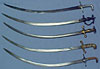
I would classify this as an Arabian Shamshir with much of the silverwork decor commonly found on Arabic swords. The "hook" pommel of the handle does suggest a Syrian influence but I wouldn't say that one feature alone would make me lean towards Syria solely. As you say, perhaps the inscription could bear some insight but unfortunately I am unable to assist with that. The hand motif is most interesting and something I have not run across before. Perhaps it represents a person who held a particular post or rank and that hand symbol symbolizes that office. I bet the inscription might lend some foresight into that regards as it may have a persons name or rank inscribed. Another lovely sword.
|

|
|
|
|
|
#2 |
|
Member
Join Date: Jan 2005
Posts: 176
|
Hello Eftihis,
This sword is indeed syrian, typical syrian hilt, crossguard and scabbard, but the blade looks weird. Syrian blades do not have these types of strongly acute tips. I can read most of the script on the scabbard back. I shall soon post what it reads. EDIT: ahh here, the seventh pic down reads:" Shighil Hilmi Attallah Al-Tirzi Bi-Ghazza sanat (?) hijriya" Which translates as:" Work of Hilmi Attalah Al-Tirzi in Gaza (gaza??!!) in the year of (I cannot read the date properly) AH" As this sword was certainly made during Ottoman times, gaza could be logical, as it all was part of Greater Syria "Al-Sham", but Ive never heard of swordmaking in Gaza. Last edited by M.carter; 25th April 2005 at 01:56 PM. |
|
|
|
|
|
#3 |
|
Member
Join Date: Jan 2005
Posts: 176
|
The inscription between the two hangers reads "Jum'a Saleem Al-Shinyoora". Probably the owners name.
You can also see the Ottoman Crescent and Star sign on the hook pommel. |
|
|
|
|
|
#4 |
|
Member
Join Date: Jan 2005
Posts: 176
|
Eftihis, if you can provide us with a closer, higher resolution pic of the indicated part of the inscription below, maybe I can read the date of this sword and when it was made.
|
|
|
|
|
|
#5 |
|
Member
Join Date: Dec 2004
Posts: 987
|
I finally may have something to contribute to a shamshir discussion! I believe that the rose, which is being held or reached for by the hand, is a Sufic (Sufitic? Of the Sufi) symbol frequently appearing in Sufi poetry. I believe it represents nostalgia, longing for happiness/perfection/purity. Something like that.
|
|
|
|
|
|
#6 | |
|
Member
Join Date: Jan 2005
Posts: 176
|
Quote:
|
|
|
|
|
|
|
#7 |
|
Member
Join Date: Nov 2004
Location: USA
Posts: 1,725
|
Many thanks for the translation, Mark (Carter).
|
|
|
|
![]() |
| Thread Tools | Search this Thread |
| Display Modes | |
|
|