
|
|
|||||||
 |
|
|
Thread Tools | Search this Thread | Display Modes |
 30th May 2007, 02:44 PM
|
#1 |
|
Member
Join Date: May 2007
Location: J a k a r t a
Posts: 991
|
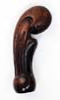
 K i n a t a h (Tinatah -- Gold Ornaments in Keris and Tombak)
Panji Wilis -- the simplest gold ornament in keris (Some people call it, as Panji Pilis). And gold ornaments in tombak or spear...
Ganjawulung |

|

|
|
30th May 2007, 03:02 PM
|
#2 |
|
Member
Join Date: May 2007
Location: J a k a r t a
Posts: 991
|
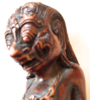
Wedung with Ornaments
Some people believed, that wedung was usually used by ulamas. But I'm sorry, I don't have any "direct source" to tell you, what, why and how the wedung is..
Ganjawulung |
|
|
|
|
30th May 2007, 03:20 PM
|
#3 | |
|
Member
Join Date: Dec 2004
Location: Sweden
Posts: 1,637
|
Quote:
"Wedung is a type of parang worn by chiefs in Java, having a long horn spur to slip into the belt. On state occasions these chiefs may only wear one keris and that at the back; and the wearing of the wedung is intended to symbolise their readiness to cut down belukar (undergrowth) or do anything else their sovereign may require." Michael |
|
|
|
|
|
31st May 2007, 05:44 AM
|
#4 |
|
Member
Join Date: May 2007
Location: J a k a r t a
Posts: 991
|
Thanks a lot, Michael
It would be useful to me, if I get the book soon... Thank you, Sweden... (I had a very nice experience, crossing from Kopenhagen to Malmo by the jetfoil more than 10 years ago... Unforgettable!) Ganjawulung |
|
|
|
|
31st May 2007, 08:17 AM
|
#5 |
|
Member
Join Date: Dec 2004
Location: Sweden
Posts: 1,637
|
Ganja,
That's fun because Malmo happens to be the city I was born and grew up in. Michael |
|
|
|
|
31st May 2007, 08:50 AM
|
#6 |
|
Member

Join Date: Aug 2006
Location: Italy
Posts: 928
|
Another gold ornament in keris (the keris isn't mine
 ) . ) .
Last edited by Marcokeris; 31st May 2007 at 09:23 AM. |
|
|
|
|
31st May 2007, 09:49 AM
|
#7 |
|
Member
Join Date: May 2007
Location: J a k a r t a
Posts: 991
|
Hi Marco,
Where did you get this beautiful keris? The style, probably Solonese. But the handle (hilt) is (wanda) banyumasan. Banyumas is a souverignity state of Solo or Surakarta in the south-western of Central Java. Kemuning werut (the hilt) isn't it? Ganjuawulung |
|
|
|
|
31st May 2007, 09:55 AM
|
#8 |
|
Member
Join Date: May 2007
Location: J a k a r t a
Posts: 991
|
Marco,
Oh no, not banyumasan. Solonese. Kemuning werut. The kinatah motive in the first wedana (first field, in the bottom of the ganja) is "gajah singa" (elephant and lion). It is a "candra sengkala", figure that mentioning the date of such style of ornament (Sultan Agung, Mataram era). Although probably it was made in the different time... Nice to look at. Ganjawulung |
|
|
|
|
31st May 2007, 10:01 AM
|
#9 | |
|
Member
Join Date: May 2007
Location: J a k a r t a
Posts: 991
|
Quote:
Ganjawulung |
|
|
|
|
|
3rd June 2007, 09:17 AM
|
#10 |
|
Member
Join Date: May 2007
Posts: 199
|
Wouw... wondeful pictures
I have some kinatahs, but none are excellent. Perhaps, because of corrotion. I wonder if any kinatah is still complete for centuries/decades. Perhaps, there is a special treatment in how to protect the kinatah.How? let's discuss and share information? Sometimes, I have a will to restore the kinatah. But, someday, my acquintance advised me to find goldsmith who, at least, knowing about keris. Still in his explanation, if using heat to inlaid gold it must be careful. the heat can influence to the power of keris/tombak. Especially, in methuk or gonjo. in the area between methuk/gonjo and blede was a meeting point. "It is important part", he added. Perhaps, his approach was more spiritual than rational. |
|
|
|
|
3rd June 2007, 06:59 PM
|
#11 | |
|
Member
Join Date: May 2007
Location: J a k a r t a
Posts: 991
|
Quote:
In my opinion, Yogyakartanese mostly keep the kerises they have, as they are. Changing old kerises is "forbidden" in Yogyakarta. Of course, not strictly forbidden by law. Say it, Yogyakartanese usually doesn't want to change old kerises. So, just keep your keris as it is. The more original the "kinatah", the better. Solo? You may change your kerises to look more good-looking... Why the kinatah of these kerises in this thread are "perfect"? I just say about my kerises. I dare to say, that the kinatah in my kerises is "nem-neman" or just say it: "gagrak anyar". Even the "garap" or work of art of the kinatah is quite perfect. (But not the wedung, it is worse than the kinatah of the spear and panji pilis in the keris). Raden, do you still want to renew the kinatah in your keris? Even in Yogyakarta there are some good kinatah maker. Say, there is Nugroho, or Sarju. In Solo, Yanto is one of the best too. Kinatah is only gold ornaments in kerises. You put off the kinatah from your kerises, surely the kerises are still good looking. Such kinatah art was developping exponentially in the golden era of Mataram, under Sultan Agung (1613-1645). One of the most wellknown motive of kinatah in this era, was "gajah singa" (elephant and lion, as the kinatah motive of Marco's keris in this thread...) Please, feel free to choose, Raden. Classic style, or gagrak anyar style? Ganjawulung |
|
|
|
|
|
3rd June 2007, 09:10 PM
|
#12 |
|
Member
Join Date: May 2007
Posts: 199
|
dear Gonjo,
I prefer to keep my kerises and top spears as they are. As your guessing, perhaps, I represent Yogyakarta classic style. Or just simply, I do not dare to do it because I grew in the environment of spiritual believers. Even, I justify to myself not a believer, it does not switch my position to be a challenger. However, if I have an opportunity to commision kerises again, I am going to consider to have kinatahs (classic style, modern style, arabic inscription and talisman sign such as kalacakra). So, the kerises will have kinatahs since they are born. According to Nugroho (alias Sarju?) and Yanto, I dont know them. However, once I knew Nugroho's working. At that time, an acquintance showed me a good keris blade (but) without gonjo. One month later, he showed me that keris with gonjo kinatah in "perfect" condition. He said that Nugroho did it. IMHO, it was excellent. I would not distinguish that gonjo was "susulan/unoriginal" if I didnt know the strory behind. According to kinatah motive of Gajah-Singo, I love it. I have been trying to find one of them, the original one. In my believe, a keris with gajah-singo ornament was used by whom involved in Pati War during Pragolopati the Second era. At that time, Mataram defeated sucessfully Pati (but sorrowfully and painfully). As a tribute to heroes, Sultanate allowed them involved in Pati War II ornamenting their kerises with gajah-singo motive. So, it is quite common there are kerises which expected older than Mataram period having kinatah gajah-singo. However, imho, it is anachronism if there is younger keris with kinatah gajah-singo. Furthermore. most of gajah-singo holders became true heroes afterwards. They were assassinated in the other Mataram expeditions. Why? Cursing? None knows. Logical sequence thought, too many wars made bigger opportunity to be killed. But, since when, did Javaneses take more logical than sipritual aspects as a consideration?! |
|
|
|
|
4th June 2007, 04:44 AM
|
#13 | |
|
Member
Join Date: May 2007
Location: J a k a r t a
Posts: 991
|
Quote:
"Gajah Singa Keris Siji" or "Gajah Singa Keris Tunggal" (Two beast: Elephant and Lion, One Keris) is a "candra sengkala" or Javanese phrases to commemorate a certain year. One must interprate the year (Javanese year, not Masehi year) by reading the phrase from behind. Gajah (8), Singa (5), Keris (5), Tunggal (1). Must be read as the year 1558 lunar year or Javanese year. It means that "the end of Pragola rebellion is in 1636 Masehi". No wonder, if someday you find a "no good" keris bearing a beautiful ganja of "gajah singa" kinatah. If it is original, then that keris once belonged to a Mataram soldier in the past that had been given by Sultan Agung Anyakrakusuma (reigned Mataram in 1613-1645), the ganja bearing kinatah gajah singa... Ganjawulung |
|
|
|
|
|
4th June 2007, 10:01 AM
|
#14 |
|
Member
Join Date: May 2006
Posts: 7,229
|
Interesting comments, Ganja, in respect of stylistic preferences between Jogjakarta and Surakarta.
The senior branch of the House of Mataram is Surakarta. Now, as you have noted, the senior branch prefers a style which calls for renewal of outward appearance, whilst the junior branch of the House of Mataram calls for a style which preserves outward appearance. In the case of Surakarta, this stylistic preference could be interpreted as a continuation of Hindu-Javanese tradition, as this tradition calls for constant renewal of outward appearance, as can be seen in Bali-Hindu style today. For instance, the beautiful candis of Jawa that we now admire for their weathered stone, were, in the days when they were newly constructed and used, decorated in vibrant colours.Colours that were constantly renewed as they faded. On the other hand, the preservation of things of a past time , as we see in Jogjakarta style, is more in tune with the Islamic faith, than with Jawa-Hindu. I am not saying here that Surakarta is aligned to Jawa-Hindu, rather than Islam, but I am saying that the Surakarta style reflects a part of Karaton inheritance and tradition that the founders of Jogjakarta omitted to take with them. Similarly, some of the stylistic elements of a Jogjakarta keris are reflective of Mataram style, whilst some of the stylistic elements of the Surakarta keris are reflective of Majapahit style. |
|
|
|
|
| Thread Tools | Search this Thread |
| Display Modes | |
|
|


 Linear Mode

