
|
 8th January 2019, 08:34 PM
|
#1 |
|
Member
Join Date: Jun 2013
Posts: 1,337
|
 Interesting Barong for Comment.
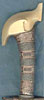
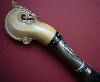
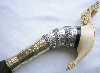
I recently picked this up at auction. It has a nice blade with the reoccurring centipede motif with a silver ferrule, however, I'm not too sure of the metal wrap on the handle. Is this a more recent addition?
Any comments would be appreciated. |

|

|
|
8th January 2019, 10:50 PM
|
#2 | |
|
Member
Join Date: Apr 2005
Posts: 3,255
|
Hello Drac,
Very nice blade! Quote:
From the pics, the surface finish of the wood seems to be a bit uneven (aside from the chipped areas). If this is real, I also would consider the possibility that the pommel might be a later replacement (also the wood choice is unusual for an high-end example); very sound craftsmanship though, likely not recent work (possibly at the same time as the scabbard?). Any worn surfaces? Regards, Kai |
|
|
|
|
|
8th January 2019, 11:28 PM
|
#3 |
|
Member
Join Date: Jun 2013
Posts: 1,337
|
Thanks Kai.
Those possibilities also came to my mind; that is why I feel that the blade and the silver ferrule are original and the other components could be later add-ons or modifications. The metal fits almost seamlessly and I think that your point that there may have been some bindings at the junctions is very reasonable. In my limited experience, I haven't seen that type of pattern on the sheeting covering the handle. The handle was very dark before I cleaned it with silver polish. What areas did you want to know if it was "worn?' |
|
|
|
|
9th January 2019, 01:35 AM
|
#4 |
|
EAAF Staff
Join Date: Dec 2004
Location: Louisville, KY
Posts: 7,420
|
I agree that the brass parts are recent as well as the pommel. The style of carving and the mother-of-pearl inlays indicate this. However, I also agree that the blade and the silver parts are original. Also the scabbard is newer in style.
Part of the problem is that no one in the Philippines can do the same weaving in silver wire as their ancestors anymore. Regarding the silver inlay, centipedes found in the Philippines (and the region) are huge and very poisonous. Great talisman to make the weapon lethal (and the owner protected?) Congratulations! |
|
|
|
|
9th January 2019, 01:53 AM
|
#5 |
|
Member
Join Date: Jun 2013
Posts: 1,337
|
Thanks for the imput.
|
|
|
|
|
9th January 2019, 02:49 PM
|
#6 |
|
Member
Join Date: Dec 2004
Posts: 1,038
|
Congrats on a nice win.
The insets seems to be mother of pearl, I wonder if these are replacements or a sign of the pommels age. Usually on the older pieces, they're bone, some Ivory, but mother of pearl, rarely. The fit of the insets might also be a clue of its age. Nice blade. I also have a Barung with a similar centipede inlaid blade. Thanks for sharing. |
|
|
|
|
9th January 2019, 03:35 PM
|
#7 |
|
Member
Join Date: Apr 2005
Posts: 3,255
|

I'm with Albert on this one: This type of hilt may exhibit MOP inlay and still date from the second half of the 19th century. Here's a pic of what I believe to be a genuinely old example with original MOP inlay (both extensions of the pommel have been repaired though).
Regards, Kai |
|
|
|
|
9th January 2019, 03:51 PM
|
#8 | ||
|
Member
Join Date: Apr 2005
Posts: 3,255
|
Hello Drac,
Quote:
Quote:
Your pommel is apparently made from a single piece of hardwood while the selection seems to reflect later preference/availability. The uneven surface finish of the main pommel vs. the extensions seems quite odd (except for the chipped areas, of course). Regards, Kai |
||
|
|
|
|
9th January 2019, 07:37 PM
|
#9 |
|
Member
Join Date: Dec 2004
Location: Witness Protection Program
Posts: 1,730
|
Hello Drac. nice catch! you beat me by literally half a second, lol
regarding the barung, i have the privilege of handling this before the auction. nothing in this particular barung says that it was a later piece; it's just that it was well taken cared off. i don't think the pommel was a later replacement either. as far as the brass rings; it's not a common method but i noticed these are more prevalent on wood junggayans similar to this. here is another example with brass/silver ferrule on a wooded junggayan. my thinking on this is the original owner wanted a prestigious looking handle but ol' dude is on McDonalds budget. ok, maybe Bob Evans. |
|
|
|
|
9th January 2019, 09:58 PM
|
#10 | ||
|
Member
Join Date: Apr 2005
Posts: 3,255
|
Hello Ron,
Quote:
Quote:
Any feelings about inlay that got just glued? Appears to be quite common - however, any tendencies/trends? Regards, Kai |
||
|
|
|
|
9th January 2019, 11:12 PM
|
#11 |
|
Member
Join Date: Jun 2013
Posts: 1,337
|
Once again gentlemen, thanks for all of the valuable input!
Kai, I cleaned the pommel with an oil solution; I rubbed the surface with a clean cloth and the polish. I am wondering as to what you think of as being an uneven surface on the side and top of the pommel; it is in fact the grain of the wood. Spunjer, first, you have some great pieces! Secondly, I know what you mean; I sat through the auction for hours(at home), totally frustrated, unable to get anything, either being the underbidder or getting totally blown away price-wise. The only reason why I think I got this was that it was at the end of the auction and everyone else either went home, ran out of money or fell asleep! The pictures weren't very good. Did you see the panabas and was it as nice as it looked? |
|
|
|
|
10th January 2019, 10:25 PM
|
#12 |
|
Member
Join Date: Dec 2004
Location: Witness Protection Program
Posts: 1,730
|
Kai,
quite frankly, i didn't paid that much attention at the inlays; i was more enamored with the naga on the blade. overall, i thought it was pretty consistent with barungs during the first quarter of the 20th century drac2k, thanks! unfortunately, a few of those are no longer a part of my collection. as far as the barung, i really thought i won that, haha. only after i got my summary did i found out i didn't. the panabas was another piece i had my sight on. it was a beauty! again, the main reason why i wanted the panabas was because of the naga on the blade. and yes, unfortunately it went too rich for my blood, lol |
|
|
|
|
11th January 2019, 04:11 AM
|
#13 |
|
Member
Join Date: Jun 2013
Posts: 1,337
|
There were so many items at that auction that I thought I might get and was unable to and this one I didn't think I had a chance and I got it. I have had the same experience that you have had several times in regards to having the high bid when the auction has ended, been shown as the winner, only to refresh the screen, to see that it has been awarded to a lower bidder. It was the only item that I got.
|
|
|
|
|
11th January 2019, 12:52 PM
|
#14 | |
|
Member
Join Date: Dec 2004
Posts: 1,038
|
Quote:
|
|
|
|
|
|
11th January 2019, 06:50 PM
|
#15 | |
|
Member
Join Date: Apr 2005
Posts: 3,255
|
Hello Ron,
Quote:
I'm pretty sure the barung hilt I showed in post #7 is 19th c. (as mentioned above, I believe this hilt style might have been the first to receive MOP inlays already during the 19th c.). The pommel was crafted from high quality banati wood (with much later repairs). Regards, Kai |
|
|
|
|
|
11th January 2019, 08:27 PM
|
#16 | |
|
Member
Join Date: Apr 2005
Posts: 3,255
|

Hello Drac,
Quote:
I've marked the apparently weird looking surfaces in the pics in red (chipped areas in green). It may only be a lighting issue though. Regards, Kai |
|
|
|
|
|
11th January 2019, 10:54 PM
|
#17 |
|
Member
Join Date: Dec 2004
Location: Witness Protection Program
Posts: 1,730
|
i'm still not following what you're referring to, Kai. so are you saying that the handle and scabbard are not original with the blade?
Kino, brah, Jolibee is fine dining lol. whatchu talking about? drac2k: yeah, the bidding process was buggy, although i was lucky to snag a few of what i wanted. the barung, especially. talk about that, i was surprised a similar barung went for 2k! |
|
|
|
|
12th January 2019, 03:57 AM
|
#18 |
|
Member
Join Date: Jun 2013
Posts: 1,337
|
Kai,
On the red circles, it is lighting, but on the green circle, there is a chip and a piece about 1/16" split off and that is why you cannot see the scroll work. Great eyes, I missed that one myself. |
|
|
|
|
12th January 2019, 06:13 PM
|
#19 | |
|
Member
Join Date: Apr 2005
Posts: 3,255
|

Hello Drac,
Quote:
Regards, Kai |
|
|
|
|
|
12th January 2019, 06:33 PM
|
#20 | |
|
Member
Join Date: Apr 2005
Posts: 3,255
|
Hello Ron,
Quote:
The pommel still gives me weird vibes, especially from the craftsmanship (as perceived from the pics) like the carved ukkil and fit of the inlay. With a status barung I'd expect good quality narra wood for the scabbard; even if the wood choice got influenced by a limited budget, the carving does seem more like 20th c. to me. Regards, Kai |
|
|
|
|
|
12th January 2019, 08:12 PM
|
#21 |
|
Member
Join Date: Dec 2004
Location: Witness Protection Program
Posts: 1,730
|
ok, i see what you're saying.
i should've looked more closely on this particular piece i reckon. but like i said, i saw the inlay on the blade and that's all it took. i guess at that point, a cursory look at the overall status of the sword and checked for looseness, and everything checked out. meaning it went straight to my want list. not to say it changed my perception. glad to know it went to someone from this forum. Drac2k, are you bringing that to Baltimore? |
|
|
|
|
12th January 2019, 09:34 PM
|
#22 |
|
Member
Join Date: Jun 2013
Posts: 1,337
|
The Barong is going into the collection and it will be hibernating there for many years(hopefully), with a barong that has a similar centipede blade design.
Hope to see you in Baltimore! |
|
|
|
 |
| Thread Tools | Search this Thread |
| Display Modes | |
|
|


 Linear Mode

