
|
 13th November 2017, 07:15 PM
|
#1 |
|
Keris forum moderator

Join Date: Aug 2006
Location: Nova Scotia
Posts: 7,300
|
 Keris Selit
Well, it's been a little slow around these parts so i thought i might perk it up a bit by posting this keris selit. I have assumed this one is from the Peninsula, but perhaps someone can pinpoint its origins further.
Here's what i know. These small keris (patrem size) are generally carried tucked into the waistband, often as a secondary formal dress keris. The name "selit" or "sisip" which literally means "insert", as into the waistband. The blade is just a bit over 8 inches long (about 20.5 cm) I would love to hear comments about this keris and more information around the tradition of these small keris within the Malay culture as well as see some of your own if you have them. Thanks! |

|

|
|
14th November 2017, 07:05 AM
|
#2 |
|
Member

Join Date: Sep 2014
Location: Austria
Posts: 1,918
|
Just a question: is the blade Buginese?
Regards, Marius |
|
|
|
|
14th November 2017, 08:55 AM
|
#3 |
|
Member
Join Date: Jun 2009
Posts: 1,740
|
Nice specimen, I wonder whether the blade has been shortened a bit? (slanted at the tip).
I attach the pics of 2 small Malay krisses from my collection (already shown, sorry), the blades are 16 cm and 22.5 cm long respectively. Regards |
|
|
|
|
14th November 2017, 01:39 PM
|
#4 |
|
Member

Join Date: Apr 2015
Location: Malaysia
Posts: 328
|
David;
That's a very beautiful peninsula Malaysia keris selit. By the way, Peninsula malaysia people don't use the term keris patrem but just keris selit. It is usually worn by groom during wedding, when they use formal 'Malay busana'... Old traditional Malay attire. And also during any traditional events when Malay busana is worn. Jean; Your first keris is not from peninsula Malaysia, but I guess from Sumatra based on the hilt form. The second is not Malay too I believe. the blade is heavily stained (warangan) whereas malay blade is never waranged. The hilt of the second keris is Peninsula Malay hilt though. |
|
|
|
|
14th November 2017, 02:30 PM
|
#5 | |
|
Keris forum moderator
Join Date: Aug 2006
Location: Nova Scotia
Posts: 7,300
|
Quote:
|
|
|
|
|
|
14th November 2017, 02:33 PM
|
#6 | |
|
Keris forum moderator
Join Date: Aug 2006
Location: Nova Scotia
Posts: 7,300
|
Quote:

|
|
|
|
|
|
14th November 2017, 02:41 PM
|
#7 | |
|
Keris forum moderator
Join Date: Aug 2006
Location: Nova Scotia
Posts: 7,300
|
Quote:

|
|
|
|
|
|
14th November 2017, 05:19 PM
|
#8 | |
|
Member
Join Date: Jun 2009
Posts: 1,740
|
Quote:
I agree that the first kris is probably from Sumatra but not of a common type. I have used the word Malay in the broad sense so it is not equivalent to Malaysian. Regarding the blade of the second kris, it was treated by warangan in Solo even if this is not traditional in Malaysia so you can't assess its origin based on this Regards |
|
|
|
|
|
14th November 2017, 05:55 PM
|
#9 | |
|
Keris forum moderator
Join Date: Aug 2006
Location: Nova Scotia
Posts: 7,300
|
Quote:
I could be mistaken, but from my understanding Sumatra is a bit of a mixed bag culturally. Parts of it seem to be strongly under the influence of Malay keris culture while other parts (Palembang area) were strongly influenced by Jawa. So i wonder if the custom of keris selit was not known in the more Malay influenced regions.
|
|
|
|
|
|
14th November 2017, 10:28 PM
|
#10 |
|
Member
Join Date: May 2006
Posts: 7,235
|
Green, this is not a challenge, it is a question about something I do not know.
You, and many other people have the belief that Malay keris were"never stained", and certainly this is the case at the present time. However, during my life time, and until now, I have had, and now have keris that were collected in old Malaya, before Malaya became Malaysia, and in Southern Thailand, Pattani. Some of these keris were collected circa 1920. These keris display both stained finish, and unstained finish. I have two Pattani keris that have original stain from circa 1920. I have just sold a Bugis keris collected in old Batavia (now Jakarta) in circa 1920, the blade was not stained when it was bought. So do we know when and where this ethic of "no stain" arose? It seems to me that throughout the "no stain" areas of today, that in the past it may have been a matter of personal preference as to whether a blade was stained or not. |
|
|
|
|
14th November 2017, 10:34 PM
|
#11 |
|
Member
Join Date: Aug 2007
Location: Germany, Dortmund
Posts: 9,788
|
Here is my remaining one: http://www.vikingsword.com/vb/showpo...69&postcount=2
By far not so nice like your one, 27 cm long inside sarung.
|
|
|
|
|
14th November 2017, 11:43 PM
|
#12 | |
|
Keris forum moderator
Join Date: Aug 2006
Location: Nova Scotia
Posts: 7,300
|
Quote:
|
|
|
|
|
|
14th November 2017, 11:46 PM
|
#13 | |
|
Keris forum moderator
Join Date: Aug 2006
Location: Nova Scotia
Posts: 7,300
|
Quote:

|
|
|
|
|
|
15th November 2017, 12:03 AM
|
#14 |
|
Member
Join Date: Apr 2015
Location: Malaysia
Posts: 328
|
Alan; A v good question and I'm no expert by a long shot. I hope malaysian keris experts that are present in the forum can give an answer . But I'll try to be brave and hazard an opinion.
As far as I know keris culture in Peninsula Malaysia and Patani (Southern Thailand Muslim majority province) has never had the staining culture and technique used for cleaning and maintaining the keris the way the Javanese do. In fact the term 'Warangan' has no direct translation in the Malay language. And there are no warangan materials available in Malaysia and those that need to do warangan on their (newly acquired javanese ) blades have to get them from Java. In short warangan has never been a Malay keris culture. The malay/patani blades achieved their deep black coloration not because of warangan but initial treatment of the blade in acid bath and particular choice of iron used. As to the presence of waranged old Malay blades , it may well have been done by people who have Javanese influence. |
|
|
|
|
15th November 2017, 03:54 AM
|
#15 |
|
Member
Join Date: May 2006
Posts: 7,235
|
Thanks for your opinion Green.
In fact, in the 19th century pamor in Malay blades was brought out by the use of salt and sulphur, I've used this method, it both etches and stains, and on an old blade that has been previously stained it gives quite an effective finish. I do not know if the sulphur and salt method was the only method used. In respect of the word "warangan" it is a word that exists in Classical Malay, it is a loan word from Javanese, but in was in use in 19th century Malaya and is recognised as a part of the Classical Malay lexicon. It will be found in Wilkinson where the English meaning is given as "ratsbane; realgar". Warangan also can be found in Old Javanese, but there it means "a special colour". In Modern Javanese "warangan" means "arsenic", the correct word for staining a blade is "marangi", which can also mean to poison somebody or something. So it is not quite correct to say that "warangan" has never been a part Malay usage, it definitely has been, but I agree, it is not now. The evidence of two keris, collected in Pattani in about 1920, that are stained seems to indicate that 100 years ago blade staining was carried out in Pattani. This still leaves the question:- when did it become general practice not to stain, because the evidence seems to indicate that 100 years ago, blades from Malaya, Pattani, and even Sulawesi, could be either stained or unstained. Yes, possibly Javanese influence may have played a part in staining of blades. Javanese culture was the most influential culture in Maritime SE Asia for a very long time.But new Malay blades were subjected to the salt and sulphur treatment, so some Malay blades were stained at least when new, but perhaps were never re-stained. |
|
|
|
|
15th November 2017, 04:23 AM
|
#16 |
|
Member
Join Date: Apr 2015
Location: Malaysia
Posts: 328
|
Alan;
Many thanks for your further clarification. It is interesting to note that you said 'warangan' has been a part of malay language usage. I as a Malay from Kelantan myself has never encounter this word until fairly recently when I got involved in keris collecting. Of course me not knowing this word does not mean that it was not a part of an original malay word and I am no linguist so I can not say you are wrong in this respect. I have to defer this point to other more learned people in the forum. (they must be lurking somewhere as "CCTV" ...) 
|
|
|
|
|
15th November 2017, 05:12 AM
|
#17 |
|
Member
Join Date: May 2006
Posts: 7,235
|
There would be several books of English words that I don't know Green, and I get paid for writing. Once a word falls from common colloquial usage it soon becomes a forgotten word, or its normally understood meaning can change. That's the reason we have dictionaries.
You will find warangan in Wilkinson, which is still the standard reference for Classical Malay --- or so I have been told by people who teach Classical Malay language and culture. It was published in 1901, so it is not really able to be relied upon for current Malay usage, only for that which used to be. https://archive.org/stream/aeg2034.0...e/714/mode/2up I've actually got a pretty poor memory for things that I don't deal with everyday, so when I quote something about language, even English, I usually take the precaution of checking first. |
|
|
|
|
15th November 2017, 09:07 AM
|
#18 | |
|
Member
Join Date: Jun 2009
Posts: 1,740
|
Quote:
I referred to the book "Keris and other Malay weapons" written by GB Gardner (Johore Civil service) in 1936 and it says on page 10: "The keris blade is next laid in a trough containing boiling rice water, sulphur and salt, for three or four days. This blackens the steel but scarcely touches the iron. It attacks the marks of the welds, which show as tiny etched lines. When this damascened pattern is clear, the blade is cleaned with lime juice". Although I do not fully agree with the chemical attack description by Gardner, it is clear that the new Malay blades were still stained at that time (1936) as said by Alan. Regards |
|
|
|
|
|
15th November 2017, 10:41 AM
|
#19 |
|
Member
Join Date: May 2006
Posts: 7,235
|
I'd forgotten it was in that book, and I've also forgotten the exact book it was in. It might have been an Oxford in Asia reprint, something like "In the Forests of the Far East" or some similar title, I came across it when I was about 16 or 18, it was an eye witness account, they wrapped the keris in a paste of sulphur and salt and rice water and in a banana leaf for 7 days, I used to wrap the blade in plastic. I haven't seen it since I first read it, but the book it was in I still have, I'd just need to find it --- something I am unlikely to ever do.
|
|
|
|
|
15th November 2017, 11:10 AM
|
#20 |
|
Member
Join Date: Jun 2009
Posts: 1,346
|
Newbold, "Political and Statistical Account of the British Settlements in the Straits of Malacca (...)", 1839, quotation from a Malayan MS on Krisses and process of damasking.
"How to damask Krises. - Place on the blade a mixture of boiled rice, sulphur, and salt beat together, first taking the precaution to cover the edges of the weapon with a thin coat of virgin wax. After this has remained on seven days, the damask will have risen on surface; take the composition off, and immerse the blade in the water of a young cocoa-nut, or the juice of a pine-apple, for seven days longer, and wash it well with the juice of a sour lemon. After the rust has been cleared away, rub it with warangan (arsenic) dissolved in lime juice; wash it well with spring water; dry, and anoint it with a cocoa-nut oil." A very nice Keris Selit, David, in fact one of the nicest I have seen so far. Unusual to see one with a manipulated (more elaborate) Pamor. For so many of these KS blade wasn't the important part anymore. Yours is an exception. |
|
|
|
|
15th November 2017, 01:00 PM
|
#21 |
|
Keris forum moderator
Join Date: Aug 2006
Location: Nova Scotia
Posts: 7,300
|
Thanks for your comments Gustav. I assume that this British settlement was on the Peninsula side of the straits, since as far as i know the English didn't have any settlements on the Sumatra side. The description you quote here does seem to establish both the process of staining and the use of warangan (as well as sulfur) to stain keris blades on the peninsula as early as 1839.
|
|
|
|
|
15th November 2017, 01:04 PM
|
#22 |
|
Member
Join Date: Dec 2004
Location: Greensboro, NC
Posts: 1,099
|
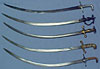
Since David asked to share examples I will share 4 from my collection.
|
|
|
|
|
15th November 2017, 01:05 PM
|
#23 |
|
Member
Join Date: Dec 2004
Location: Greensboro, NC
Posts: 1,099
|
Example 2
|
|
|
|
|
15th November 2017, 01:06 PM
|
#24 |
|
Member
Join Date: Dec 2004
Location: Greensboro, NC
Posts: 1,099
|
Example 3
|
|
|
|
|
15th November 2017, 01:07 PM
|
#25 |
|
Member
Join Date: Dec 2004
Location: Greensboro, NC
Posts: 1,099
|
Example 4. Comments welcomed on the 4. Thanks!
|
|
|
|
|
15th November 2017, 01:27 PM
|
#26 | |
|
Member
Join Date: Jun 2009
Posts: 1,740
|
Quote:
N° 1 is Minang for sure (not selit), and N° 3 & 4 look Sumatrese, see another small specimen of unclear origin but probably Sumatra also. Regards Last edited by Jean; 15th November 2017 at 05:04 PM. |
|
|
|
|
|
15th November 2017, 02:14 PM
|
#27 |
|
Keris forum moderator
Join Date: Aug 2006
Location: Nova Scotia
Posts: 7,300
|
Thanks for adding Rick. I believe you example #2 might qualify as a keris selit. As Jean points out, perhaps not the others. There are small keris that serve different functions in various keris bearing cultures, but not all are selit.
Can you give us some blade lengths on these? |
|
|
|
|
15th November 2017, 06:14 PM
|
#28 |
|
Member
Join Date: Dec 2004
Location: Kuala Lumpur
Posts: 369
|
Hello everybody,
IMHO it is probably a personal preference - at least during the turn of the century. [[The process described by Jean using salt, sulphur and rice water is used to etch the blade, not stain; but if I'm not mistaken if we drop the salt it will stain. ]] <Edit: The bold part is wrong. Pls refer to post #30 for correction. To my knowledge the word warangan was already used in Hikayat Abdullah written in early 19th century. Below is a quote from Winstedt's Malayan Memories 1916. It is part of a dialogue of a Malay keris dealer with Winstedt: "" So," he said, picking up bundle and cane, " so, I may leave this dagger with the tuan. And the tuan has got me that pink arsenic which keeps a blade bright : I want it for my creese with the damask marks which the knowing call ' the grass-hopper's legs.' " We can read it here: https://archive.org/details/cu31924021572106 I think I had read some other reference about Malays staining their keris using warangan in another text that I had forgotten about. Also, the keris on the cover of this book appears to be stained. Last edited by rasdan; 16th November 2017 at 05:55 AM. |
|
|
|
|
15th November 2017, 11:01 PM
|
#29 |
|
Member
Join Date: May 2006
Posts: 7,235
|
Thanks for that Gustav, I do have the Newbold book, I may well have read the sulphur + salt in that and forgotten the mention of warangan, or my source might have been different.
What I am positive of is that salt + sulphur + rice water, applied to a blade and wrapped in plastic for a week or so will stain a blade. I did several blades in this way +50 years ago, before I knew how to use arsenic. I did not wash off with coconut water, I washed off with pineapple juice. I think I've still got one of the blades that I did like this, and I intend to sell it at some time in the future, ie, not now, not immediate future, but in some future transaction in the indefinite future, so I'm not infringing either Forum policy, or my own policies if I post a pic. I'll see if I can find the keris I have in mind. |
|
|
|
|
16th November 2017, 05:53 AM
|
#30 | |
|
Member
Join Date: Dec 2004
Location: Kuala Lumpur
Posts: 369
|
Quote:
Reading Alan's post made me realize I have made a mistake in my post above about the sulphur method. I got confused with an etching method I used to use. I will edit the previous post. I have tried sulphur + salt + vinegar on keris blades before. This mix etches. I haven't tried sulphur + salt + rice water method. Since this method uses rice water instead of vinegar I think it wont etch or wont etch as strong and as Alan have said, will stain. So what I've written about just sulphur + rice water is wrong. Sorry I got things mixed up. G'day Alan, Regarding the outcome of the rice water method, does the iron get stained as dark as warangan with the technique? |
|
|
|
|
 |
| Thread Tools | Search this Thread |
| Display Modes | |
|
|


 Linear Mode

