
|
 23rd July 2014, 04:56 PM
|
#1 |
|
Member

Join Date: Dec 2004
Location: What is still UK
Posts: 6,032
|
 Plains stone axe for ?ing
I have taken a not too modest punt on this axe. I am familiar with much old African items with trade brass studs and have been viewing a lot of Native American work in museums lately so I feel some confidence in my gamble. I know this can be one of the most difficult areas of collecting with so much reproduction, romantic, fantasy interpretation and down right fakes. However the stone does display the right form and skilled work. The studs do not appear in 'these' pictures to be recent. Also there is something about the placing of the studs and the piece as a whole that does not look like romantic fantasist work. Lastly if I were to make a fake or reproduction of any genre like this, I would want quite a bit more than I paid for it.
It has yet to arrive which will involve another charge so I am feeling rather anxious. When it arrives and is worthy of further investigation i will add more information. We lack input here from collectors of Native American weapons. They/you are out there and I bet you have visited this site so why not join in? |

|

|
|
24th July 2014, 06:42 AM
|
#2 |
|
Member
Join Date: Dec 2004
Posts: 1,247
|
I'm a bit troubled by this one. Hatchets and tomahawks were a trade item from very early on (like 16th Century, IIRC), so I'm trying to get my head around how you get a stone head with brass tacks that aren't massively tarnished. Unfortunately, the simplest way to do it is to find an unattached stone head and work from there.
My 0.0002 cents, F |
|
|
|
|
24th July 2014, 09:06 AM
|
#3 |
|
Member
Join Date: Dec 2004
Location: What is still UK
Posts: 6,032
|
Very good point. That thought has also been in my mind. There is a chance that besides looking like a weapon it could be ceremonial or dance piece. Clearly some of the artifacts out there are genuine as in this link.
http://cdm15330.contentdm.oclc.org/c...id/2144/rec/13 I keep my fingers crossed that I may have been a lucky so and so who was silly enough to have a go. In the time being I will search for more interesting stuff. |
|
|
|
|
24th July 2014, 06:30 PM
|
#4 |
|
Member
Join Date: Dec 2004
Location: What is still UK
Posts: 6,032
|
Food for thought. Say this item presents an old axe? It may been used later as a dance or status piece? Is it possible that we assume that the original culture was not capable of appreciating there own antiques, unable to bringing them forward in new forms?
|
|
|
|
|
25th July 2014, 01:29 AM
|
#5 |
|
Vikingsword Staff

Join Date: Dec 2004
Location: The Aussie Bush
Posts: 4,749
|
Tim,
Those brass tacks don't look quite right to me. There appear to be none missing, which would be unusual for an otherwise older looking piece. Fearn has also commented on the "pristine" condition of those studs. I would have expected at least an occasional ding on at least one stud over the lifetime of an old axe. Similarly, the haft and leather work look to be complete--nothing obviously missing. This just raises some red flags for me. I sincerely hope you have lucked out here! Cheers, Ian. |
|
|
|
|
25th July 2014, 02:14 AM
|
#6 |
|
Member

Join Date: Nov 2006
Posts: 37
|
Tim,
I have been on this form for many years, but have become more active since my retirement from the military. I have collected stone tools since I was a child (grew up in Eastern Colorado on a ranch), have done extensive archaeological work, and have even lectured once (as a guest) on the production of stone tools at the University of Maryland. My replication (stone tools are my forte) work can be seen online by typing in my name and flint knapping in a Google search...just to give you some background on me and artifacts. I have been fortunate to handle some of the finest collections of stone tools, as well as perishables in the country. I have never seen anything like this outside a tourist stop. It just looks wrong from so many levels. HOWEVER, I'd love to see better/clearer photos of the stone head, there is a small possibility that it could be an older piece married into its current wardrobe. The head reminds me of a typically bi-facially worked preform for a larger knife form. There are bi-facially worked chert/flint axes found here in the States however most are bowtie shaped and some from the south can be shaped a bit like yours. This doesn't even take in to account prestige items that were made for status not utilization (although could have been). Most all true ax or celt forms are normally made of a different type of lithic material (metabasalts ect.) and instead of being left in a flaked stage are smoothed and shaped by a process of pecking and polishing. Not too unlike the process for polished bit flint celts from the UK and the square sectioned axes of the upper Baltic and Scandinavia. The true "war clubs" whether ball type or the bi-pointed type, along with hafted mauls found on the plains are normally made by pecking and polishing as well and normally have a prominent central groove in the head to facilitate hafting. I could bore you with hours of drivel on stone tools...I found my first one when I was 8 years old and they continue to be a passion 41 years later (and always will)...I love sharp, pointy things! Hope this helps and is not too disappointing, but again, just my opinion. Feel free to PM me if you have further questions...just my 2 cents. Take care. All my best, John |
|
|
|
|
25th July 2014, 03:32 AM
|
#7 |
|
Member
Join Date: Oct 2008
Posts: 385
|
As a casual student of Native American weapons, I agree with John. Most weapons being as he described. My thoughts are, that this is an early 20th century, "tourista" piece. If that's the case, it is still very desirable, and valuable. Items from that era, can sell for thousands.
|
|
|
|
|
25th July 2014, 07:45 AM
|
#8 |
|
Member
Join Date: Dec 2004
Location: What is still UK
Posts: 6,032
|
Thanks for the most interesting replies. Fortunately the cost was bearable. My only riposte will be that I can provide pictures of examples from books of collections that differ. Also examples of artifacts with no missing beads or decorative elements. We all have perfect pieces in our collections? I do appreciate your input.
John, I would like opinions on this stone club? |
|
|
|
|
26th July 2014, 10:11 PM
|
#9 | |
|
Member
Join Date: Nov 2006
Posts: 37
|
Quote:
This piece looks a lot better to me (again, I'd need to see close-ups of the stone head to truly give you my opinion on it). The haft looks correct, the sewing of and the age of the rawhide looks correct (old rawhide unless kept in the right environment continues to shrink and shrivel and take on a more aged appearance). The handle (again from what I can see in the photos) appears to have use wear and I think I can see the remnants of what appears to be abrasive marks from shaping the handle with stone tools. Most times utilitarian tools lack the refinery seen in other formalized stone tools. All of the authentic, "war clubs", if you will that I have seen/handled have had very nice refined heads normally of some type of quartzite normally naturally occurring rock in the shaped desired...even these normally had a groove pecked in/around the center to facilitate hafting (in a manner demonstrated in the last piece you displayed). Remember, these weapons were designed for maximum impact and affect, normally are very hardy and made of a material that can withstand repetitive impacts. Flint/chert can meet those requirements (referring to your original post) but must be constructed correctly (engineered as pertaining to the overall design of the head) with the right angle on the bit, and made out of a tougher flint or chert. As far as perfect pieces, I get more afraid/leery of a perfect example of any stone tool or hafted tool. First off, perfect specimens are out there, but in extremely limited numbers, especially for plains peices. Finding preserved hafted artifacts (North American) of true antiquity is very rare as the conditions ideal for the preservation of perishables only exist in a few regions of N. America (normally arid, desert areas) or if they were collected and curated somewhere in their life. I have a few acquaintances that have extensive perishable collections with outstanding examples of netting, sandals, pieces of arrow/dart shafts, atlatls ect. The stuff is out there, but rare. I hope this helps...again, the last piece you posted from what I see looks like a nice older utilitarian piece...North America, I am not sure without closer examination of the head...but again, I like it and it looks right! Have a great and safe weekend! All my best, John |
|
|
|
|
|
7th August 2014, 04:37 PM
|
#10 |
|
Member
Join Date: Dec 2004
Location: What is still UK
Posts: 6,032
|
It has arrived and to my surprise it is really rather nice. I do not know what to make of it. There is quality to it, even patina. It has been constructed with a lot of consideration to weight and balance. It is light and although one could make a mess of somebodies head and face with it I do not think it has been made as an axe. The stone is the right shape for stone blades from the plains { I will upload pics from reference books }
I have taken some pictures that differ somewhat from the sellers. I think they are quite interesting when seem in the light of this thread- http://www.vikingsword.com/vb/showthread.php?t=18864 If I were an authority I might suggest that this may well be a coup stick that just happens to be in the form of an axe. Not all coup stick are long and like a Sheppards crook { I will upload pictures } I am not saying it is something from the times when Red Cloud sent the army packing. The big but is when does traditional art stop and recreation for a mass tourist market { not to mention the fantasy market, dream catcher style } take over. I might suggest there may well have been a period of transition where real or of the right ethos art was made for limited sale around the turn of the 19/20 centuries. Many real experienced warriors joined Buffalo Bill? It could still be a load of c--p. |
|
|
|
|
8th August 2014, 06:58 PM
|
#11 |
|
Member

Join Date: Apr 2014
Location: Louisiana
Posts: 363
|
In my somewhat limited experience with American Indian weapons, one thing I see consistently is that the thread used to stitch the hide should be sinew, not cotton, until late in the game.
There should be some patina at the junction of brass tacks and leather. The chemicals used in the tanning process, whether commercially tanned, or tanned on the Plains using brains of the animal, or untanned rawhide, all will interact with the brass over time, dirt from regular handling will be found in traces in the crevices and overall. There should be a worn in appearance, like everything has been together for a long time, and not look like it has been left on a shelf or handled gingerly, with white cotton gloves as in a museum. Remember, these were tools that could and would be replaced when worn out or broken, not artifacts nought of in the way we do today. |
|
|
|
|
8th August 2014, 09:52 PM
|
#12 |
|
Member
Join Date: Dec 2004
Location: What is still UK
Posts: 6,032
|
Thank you for your interest. This piece is sewn with sinew, but supplies of thread sinew can be found on the internet. The stone takes some skill to make. How much time does it take to do this? How much money does a faker , fantasy reproduction artist want from thier efforts? I do not know. All I can say is that if you have ever tried to carve a nice polished pleasant to hold walking stick or hiking stick with some artistic expression, takes many hours.
|
|
|
|
|
9th August 2014, 06:07 AM
|
#13 |
|
Member
Join Date: Apr 2014
Location: Louisiana
Posts: 363
|
Glad to contribute.
I have known a number of fakers over the years, either "improvers" to antique weaponry, (who just somehow can't leave a good piece alone. They sharpen edges that were not previously sharp, add semiprecious or precious stones, enhance or add names or inscriptions, etc.), creators, who make things from scratch, and, the most dangerous, those who buy marginal pieces that are honest and reverse engineer an interesting provenance to lock several things together that supposedly tell a story using period business cards invoices, photographs, or other things. They, in turn, will sell these conglomerations at gun shows for surprisingly big money. An example of this type are the "Vampire boxes". A nice, period box, a nice old crucifix, old bottles for holy water, an old bible or other holy book, a wooden stake or two, some garlic, an old (and not too valuable pistol of the"period" and maybe a few cast silver bullets thrown in for good measure. I live in a city that through books and movies, somehow has been seen as a home for vampires in the 18th and 19th centuries. There have never, repeat, never been creations like vampire boxes here, or anywhere else. The point of this diatribe is to state that sometime fakers can make good money from their deceptions, and see it as a challenge. They do not think of it terms of the cost of materials and billable hours, straight business, train of thought. A late, and highly respected author of a guide to antique guns asked me at a show about a particular individual who was selling such trash for big money. Apparently things were starting to catch up to him. As we walked around, the person in question just happened to walk down another aisle a row or two away! I pointed him out, both of us astonished that the timing could not have been more perfect. And he had one of his cohorts with him as well! It seems that a number of East Coast collectors who had been taken by this bum were starting to look for him. Anyway, over breakfast the next day, the conversation continued, he asked if I possibly had a photo of him. No, why would I? Well, in the city paper that morning they had a little coverage of this show, and in a picture, guess who was front and center? Not long after that, this person was not to be seen at shows and was rumored to be selling used cars or siding somewhere a thousand miles away! But, as that was seven or eight years ago, I have since heard rumors that he's back, the statute of limitations having run out. The old axiom, "you can't kill bad grass" definitely applies here. I again apologize for the length of this story, I hope that everyone out there in the collecting world will be on guard for this. |
|
|
|
|
9th August 2014, 04:37 PM
|
#14 |
|
Member
Join Date: Dec 2004
Location: What is still UK
Posts: 6,032
|
I really do not know what to make of it. I certainly do not think it a tourist item. It was not expensive but also not a that cheap. There is the saying " if looks too good to be true then it probably isn't " There is the chance that it could equally be genuine as it could a fake/reproduction. A very difficult area to dabble in. Many of my Oceanic pieces have been bought at prices too good to be true but they are spot on. My collecting has been from the outside edge concentrating on the over looked, unfashionable and the least researched.
It fits in so it will not be banished from the collection as other errors have been. 
|
|
|
|
|
9th August 2014, 06:07 PM
|
#15 |
|
Member
Join Date: Jan 2008
Posts: 1,436
|
It seems there is a fair industry in making replica or fantasy Native American weapons. A quick internet search of "Native American tomahawks for sale" produces loads.
Sometimes difficult to see when genuine old objects stop and made for sale items start... |
|
|
|
|
9th August 2014, 06:34 PM
|
#16 | |
|
Vikingsword Staff
Join Date: Dec 2004
Location: The Aussie Bush
Posts: 4,749
|
Quote:
Perhaps we all have some of these sentiments, but only a few talk about them.  Ian. |
|
|
|
|
|
9th August 2014, 08:08 PM
|
#17 |
|
(deceased)
Join Date: Dec 2004
Location: OKLAHOMA, USA
Posts: 3,138
|
I BUY THE OCCASIONAL WELL MADE NATIVE AMERICAN ITEM IF THE PRICE IS RIGHT. I ALWAYS ASSUME ANY STONE POINT, AX, CLUB OR SHIELD TO BE A REPLICA UNLESS I FIND IT MYSELF OR KNOW THE PERSON WITH PROVENANCE VERY WELL AND TRUST THEM A LOT. I USE THEM AS DECORATIVE ITEMS AND THEY DO MAKE A VERY NICE DISPLAY BUT I DON'T KNOW ENOUGH TO SPEND THE KIND OF MONEY EVEN THE GOOD REPLICAS BRING NEVER MIND THE ONES SOLD AS AUTHENTIC. IF I LIKE IT AND HAVE A PLACE FOR IT AND THE PRICE IS RIGHT I WILL BUY IT.
HERE IS A PICTURE OF A POINT MADE OF TEXAS ALABATES FLINT ITS NOT MINE BUT I HAD TWO POINTS LIKE IT KNAPPED FOR ME THAT LOOK JUST AS GOOD IT TOOK THE KNAPPER LESS THAN 30 MINUTES TO DO BOTH POINTS. THERE ARE MANY GOOD FLINT KNAPPERS AROUND WHO COULD DO AS GOOD OR BETTER SO THERE ARE A LOT OF FAKES /REPLICAS OUT THERE. THERE ARE ALSO LOTS OF AUTHENTIC POINTS, BLADES, KNIVES AND SCRAPERS OUT THERE THAT CAN BE MOUNTED IN AXES OR AS KNIVES OR SPEARS. SEVERAL PEOPLE I HAVE KNOW REGULARLY BUY AN OLD INEXPENSIVE GUN AND WITH A BIT OF LEATHER AND A FEW BRASS TACKS AND STUFF MAKE A GUANINE INDIAN GUN TO SELL. I DON'T COLLECT IN THE FIELD BECAUSE THIS HAS BEEN GOING ON FOR MANY YEARS AND THERE IS A LOT MORE BOGUS THINGS OUT THERE THAN THE REAL ITEMS. I HAVE BEEN AROUND SUCH STUFF MOST OF MY LIFE AND CAN RECOGNIZE MANY REPLICAS BUT SOME CAN EVEN FOOL THE EXPERTS. SO IT IS A VERY DIFFICULT FIELD TO BEGIN COLLECTING IN A GOOD HONEST DEALER WOULD BE INVALUABLE TO GET STARTED. |
|
|
|
|
13th September 2014, 12:04 PM
|
#18 |
|
Member
Join Date: Dec 2004
Location: What is still UK
Posts: 6,032
|
Doing lots of searching and research on this piece. Not wanting to fill this post with a multitude of links. It is quite possible that this piece is a ceremonial tomahawk, "tomahawk" being rather a misnomer for the original stone axe version. Stone axes were used in dance, ceremony, and as gifts in diplomacy.
|
|
|
|
|
13th September 2014, 07:49 PM
|
#19 |
|
(deceased)
Join Date: Dec 2004
Location: OKLAHOMA, USA
Posts: 3,138
|

THERE IS ANOTHER SIDE TO THIS FORM OF PRODUCTION. THE TRIBES WERE TAKEN FROM THEIR LANDS AND PUT ON RESERVATIONS AND NO LONGER ALLOWED TO WANDER, HUNT OR MAKE WAR EVEN ON EACH OTHER. OLD TRIBAL TRADITIONS AND BELIEFS WERE REPRESSED AND MANY LOST THEIR WAY OR BECAME VICTIMS OF WHISKY. EVEN GRANAMO MADE AND SOLD BOWS AND ARROWS AND LEARNED TO WRITE HIS NAME SO AS TO SELL AUTOGRAPHS TO PROVIDE MONEY FOR HIS NEEDS. THE TRIBES MADE MANY TRADITIONAL ITEMS DURING THIS TIME OF SUBSISTENCE LIVING AND SOLD THEM TO TRADERS OR IN SMALL STANDS ALONG THE MAIN ROADS. BASKETS, POTTERY, CLOTHES, BEAD WORK, BLANKETS AND SOME WEAPONS WERE MADE AND SOLD. SOME LEARNED TO SIGN THEIR NAMES TO POTTERY OR KACHINA DOLLS WHICH ARE NOW HIGHLY COLLECTIBLE. TODAY SOME NATIVE AMERICAN ARTISTS STILL MAKE GOOD TRADITIONAL ITEMS FOR SALE IN SHOPS OR IN ROADSIDE STANDS.
ITEMS WERE SOLD AT THE MANY WILD WEST SHOWS THAT WERE POPULAR AS WELL AND NOTABLE CHIEFS AND WARRIORS OFTEN APPEARED IN THEM. BUFFALO BILL, PAWNEE BILL AMONG OTHERS TOURED WITH THEIR SHOWS EVEN TO EUROPE. ITEMS ASSOCIATED WITH THESE SHOWS ARE SOUGHT AFTER BY COLLECTORS. THERE ARE FAKES OR MODERN REPLICAS AS WELL AS ITEMS MADE BY NATIVE ARTISTS BEING MADE TODAY BUT MIXED IN AMONG THEM ARE THE OLD AUTHENTIC ITEMS FROM THE SHINING TIMES AND FROM THE SAD RESERVATION TIMES UP TO THE PRESENT. A INTERESTING BUT VERY DIFFICULT FIELD IN WHICH TO COLLECT. THE AX IN QUESTION APPEARS TO BE WELL MADE AND WILL SERVE AS A GOOD REPRESENTATIVE ITEM OF THE TYPE WEATHER RECENT OR FROM THE DAYS OF THE WILD WEST SHOWS. SOMETIMES THEY STILL CARRY SUCH MODERN TRIBAL MADE REPLICA ITEMS TODAY AT THE TRIBAL POW WOWS HERE IN OKLAHOMA. SO THESE ITEMS MADE BY THE TRIBES AND STILL USED MIGHT BE CONSIDERED CURRENT ETHNOGRAPHIC ITEMS RATHER THAN REPLICAS.  ONCE AGAIN IT WOULD BE A MATTER OF PROVIDENCE AS THE DETERMINING FACTOR. ONCE AGAIN IT WOULD BE A MATTER OF PROVIDENCE AS THE DETERMINING FACTOR.
|
|
|
|
|
16th September 2014, 01:07 PM
|
#20 |
|
Member
Join Date: Dec 2004
Location: What is still UK
Posts: 6,032
|
Here I present qualified printed reference to my suggestions. This exert is taken from.
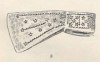
" Collecting Indian Knives Identification and Value, Lar Holthem, Includes Paleo, Archaic, Woodland-Mississippian, Hafted knives, Caches, Ceremonial, Historic, Plus Much More. Books Americana 1986 " The blade on this example of artwork relates to much of the perhistoric forms, on the plains, that is possibly not much more than 300 years ago or so. |
|
|
|
|
19th September 2014, 10:54 AM
|
#21 |
|
Member
Join Date: Dec 2004
Location: What is still UK
Posts: 6,032
|
Looking for similar pieces. I found this lovely double horn pointed example in the Brooklyn museum. Plus to me, rather suspect "antique" pieces with prices over $700 {knapped stone} and $500 for the plain example. That is several times more than I would be prepared to pay. Clearly they lack any artistic thought and aesthetic design.
|
|
|
|
|
20th September 2014, 04:21 PM
|
#22 |
|
Member
Join Date: Dec 2004
Location: What is still UK
Posts: 6,032
|
Dispersal, objects of traditional aesthetics c1900s.
I have just received a very informative book on Plains Indian art. The book put much into perspective. Exert-
After 1891, adaption to the new ways continued with some resisting and others willing to become those called progressives. Under the leadership of their pre-reservation leaders, sub-groups of larger tribes dispersed into settlements throughout the reservations away from agency headquarters. On individually allotted lands, communities grew with government substations, day schools, churches, and non- Indian trading trading posts. Religious groups established boarding schools near agencies. Distant boarding schools sprang up, some in eastern US cities, to remove Native students from tribal society and acculturate them to American lifestyles. Until 1881, specially adorned garments, footwear, and other accouterments were worn on ceremonial public occasions and signified the owner's status. That year the government officially decreed such ceremonial ans social occasions forbidden and assigned punishments for offenders. Some of these heirloom pieces were exchanged for food and household necessities at newly established trading posts and business near reservations. Merchants stocked seed beads and other art media, and women artisans continued making traditional items and sold their creations to the stores. Thus merchants became middlemen in a newly created market for collectors, museums, and other interested institutions, or individuals visiting the reservation. Newly made items also adorned children as they began their journeys to distant boarding schools. Upon arrival, these were replaced with uniforms and manufactured shoes. decorated items, some of heirloom quality, also became payments and gifts to school officials, clergy, and doctors. some of these were the beginnings of collections that would find their way into auction houses and museums after several generations of non-Indian owners. As early as 1885 and until 1914, Native men, women and children preformed in Western-life exhibitions and wild west shows. They returned with cash, art media, and fashions of dress reflective of their cosmopolitan experience. New or recycled but increasingly elaborate traditional garments for performers were now worn for Wild West tours the most well known being Buffalo Bill Cody's show that toured England in 1887 and Europe in 1889-91. Taken from "The Plains Indians Artists of Earth and Sky, Musee Du Quai Branly, SkiraRizzoli, 2014" A great museum to visit, not so good for pictures, low light levels no flash so you and your camera need to really know what you are doing. Native Americans still make art but the Aesthetics have moved on into the late 20th and 21st century. Yes you can still buy "Indian Art" replicas, fantasy weapons, dream catcher kitsch and rubbish stuff. Last edited by Tim Simmons; 20th September 2014 at 05:53 PM. |
|
|
|
|
29th September 2014, 10:30 PM
|
#23 |
|
Member
Join Date: Dec 2005
Location: Silesia, Poland
Posts: 41
|
A few years ago I owned such an axe from SE Denmark. The head was supposedly original 6000 years old. The knapping traces were indeed covered with white patina. The shaft was made according to neolithic finds. There was a golden printed certificate with it... Nevertheless, I own(ed) a lot of neolithic axes from the middle Europe and all of them are polished at least at the very edge.
http://i18.photobucket.com/albums/b1...ps0315e10b.jpg |
|
|
|
|
30th September 2014, 07:12 AM
|
#24 |
|
Member
Join Date: Dec 2004
Location: What is still UK
Posts: 6,032
|
That's very interesting. I am not suggesting this axe blade IF genuine, is older than 120 years at the most, and was never made for cutting work.
|
|
|
|
|
15th October 2014, 05:31 PM
|
#25 |
|
Member
Join Date: Dec 2004
Location: What is still UK
Posts: 6,032
|
Now I am not saying this is genuine or a skilled reproduction. I just want to point out that the item displays skills, not just balance and aesthetics. You can see the the wood has been treated with fire. You can see the real wood colour showing where there is a crack which I suspect was caused by this process.
|
|
|
|
|
12th April 2015, 11:27 AM
|
#26 |
|
Member
Join Date: Dec 2004
Location: What is still UK
Posts: 6,032
|
This piece still fascinates and stimulates me. I have found a detailed university research paper which explores the concept of 'art and costly signaling' and the manufacture of seemingly useless and time consuming products among plains people. It is a over 100 pages long with so very nice photos of late 19th century Sioux art. I have cut and paste a in a nut shell extract as well as a link. Long but well worth the effort rewarding you with enlightenment.
Hypothesis 1: Displays of body decoration and personal adornment by nineteenth century Lakota tribal members operated as social signals of prestige and skill, and were costly in terms of energy and resources. These costs guaranteed that only those individuals who could bear them would be able to produce the displays. Hypothesis 2: Costly signaling through body decoration and personal adornment by Lakota tribal members reliably indicated some hidden trait or characteristic of the signaler, and in order to maintain the honesty of these signals, some social mechanism operated to prevent free-riders from faking signals. Hypothesis 3: Costly signaling through body decoration and personal adornment by Lakota individuals was beneficial to both the signaler and receiver, resulting in a payoff of enhanced prestige at the level of the individual. http://digitalcommons.unl.edu/cgi/vi...t=anthrotheses |
|
|
|
|
12th April 2015, 04:04 PM
|
#27 |
|
Member
Join Date: Dec 2004
Location: What is still UK
Posts: 6,032
|
For those who would like quick reference pages 56 70 122 and onward are best.
You can see this axe could well play a role at a sophisticated gathering where the carrying of real weapons may cause insult. |
|
|
|
|
13th April 2015, 03:35 PM
|
#28 |
|
Member
Join Date: Aug 2014
Location: Germany
Posts: 528
|
Hello Tim,
a few years ago I bought a North American flint stone arrow head, which is some hundred years old. If the blade is old and real, the edge should be sharp, this is a very important point. My arrowhead is still very sharp. I have a modern reproduction spear head, made from vulcano glass. A translucent spear head, looks very nice but it is unsharp. Kind regards Roland |
|
|
|
|
15th April 2015, 05:23 PM
|
#29 |
|
Member
Join Date: Dec 2004
Location: What is still UK
Posts: 6,032
|
I am only adding this link as again it supports my hypothesis that this could well be genuine. Read stone tomahawks more fancy than everyday ones.
http://www.indians.org/articles/nati...tomahawks.html |
|
|
|
|
18th October 2015, 03:49 PM
|
#30 |
|
Member
Join Date: Dec 2004
Location: What is still UK
Posts: 6,032
|
In this thread I suggested that this item could possibly be a coup stick. I am not saying it is and I am not convinced, but look here. Possible? The same length 29 inches.
http://www.icollector.com/Plains-Coup-Stick_i9667226 also here https://www.bidsquare.com/l/190/plains-coup-stick |
|
|
|
 |
| Thread Tools | Search this Thread |
| Display Modes | |
|
|


 Linear Mode

