Quote:
Originally Posted by Battara

This piece looks to me to be Maguindanao based on the base blade style and on the okir work. I would also place this in the 1910s-1930s?
The bottom one I would attribute to the same tribe, but perhaps a little earlier, like the 1890s-1900s?
|
I edited the post and added
A, B, C to the pictures so that we can more clearly discuss the items.
Battara thank you for the response. I believe this is referring to item
A? "This piece looks to me to be Maguindanao based on the base blade style and on the okir work. I would also place this in the 1910s-1930s?"
While "The bottom one I would attribute to the same tribe, but perhaps a little earlier, like the 1890s-1900s?" Refers to
C?
What time period was copper used for asang asang?
C .................................................. .................................................. .................................................. ...
A
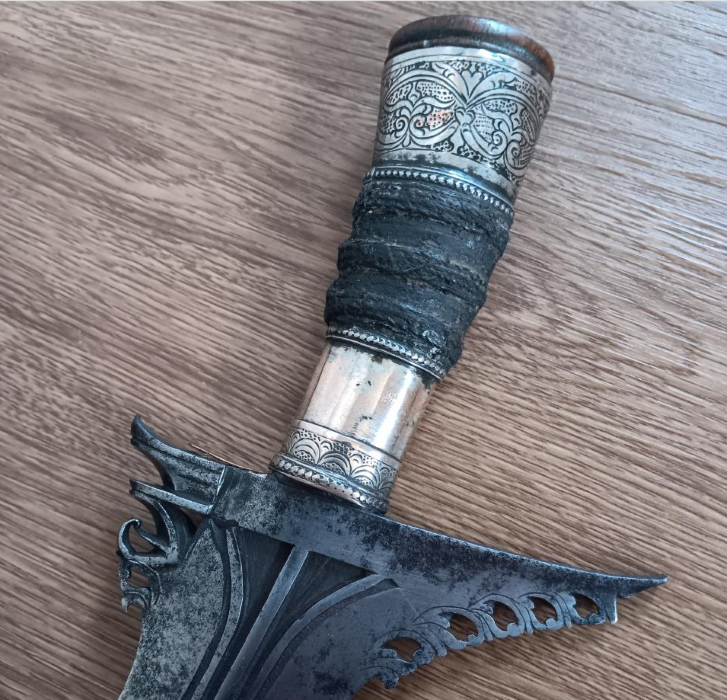
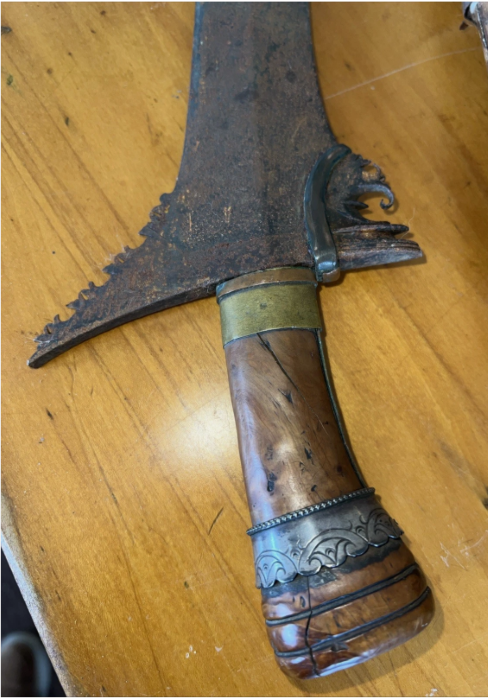
Or Did I reverse your meaning?
In a separate post you said of
C: "I say 1920s due to the style of okir work at the base (ganga) of the blade, and the fact that the ganga is not separated from the rest of the blade.
Also it is from the Maguindanao tribe."
I am asking question so that I can get an understanding of time periods for okir and other stylistic elements. And I have been curious about the moons and stemples patterns for a while.
I have wondered if
A's blade isn't a different age than the dress.